
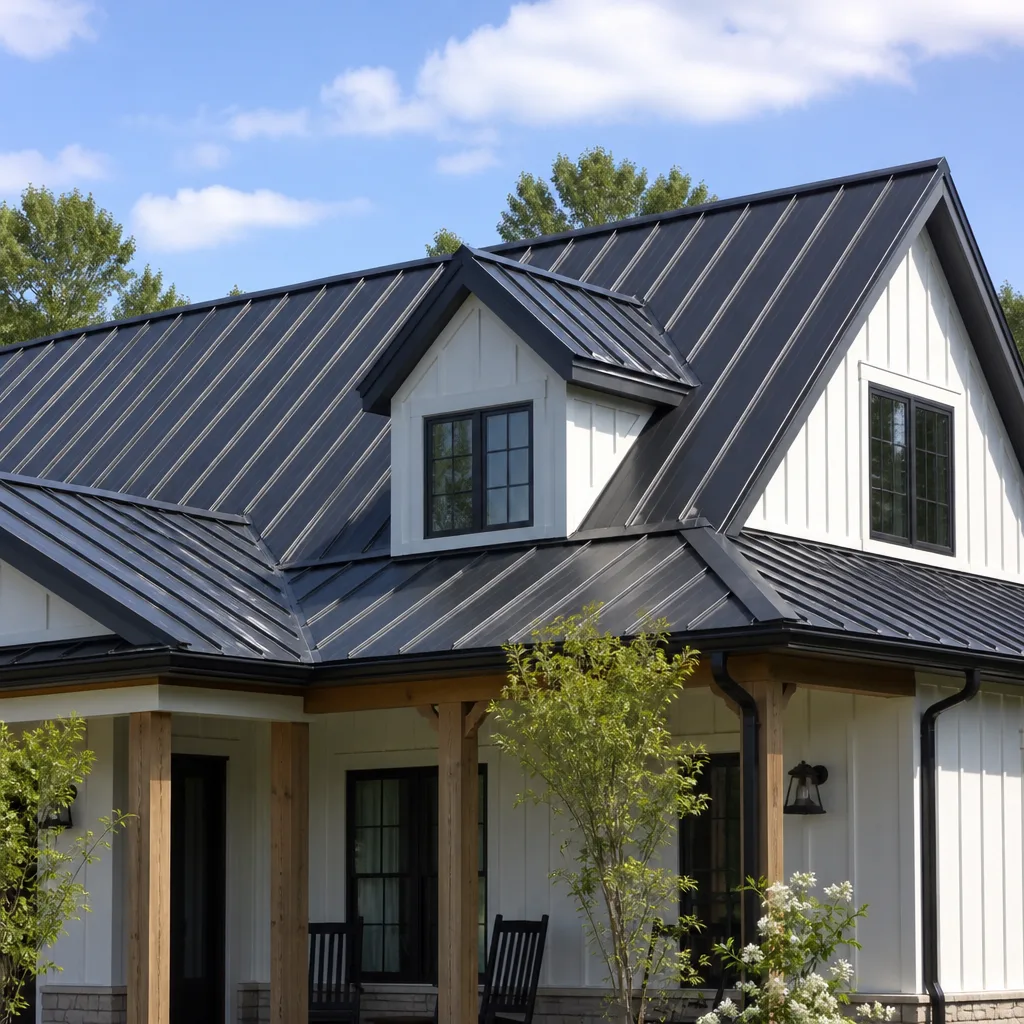
 Metal roofing
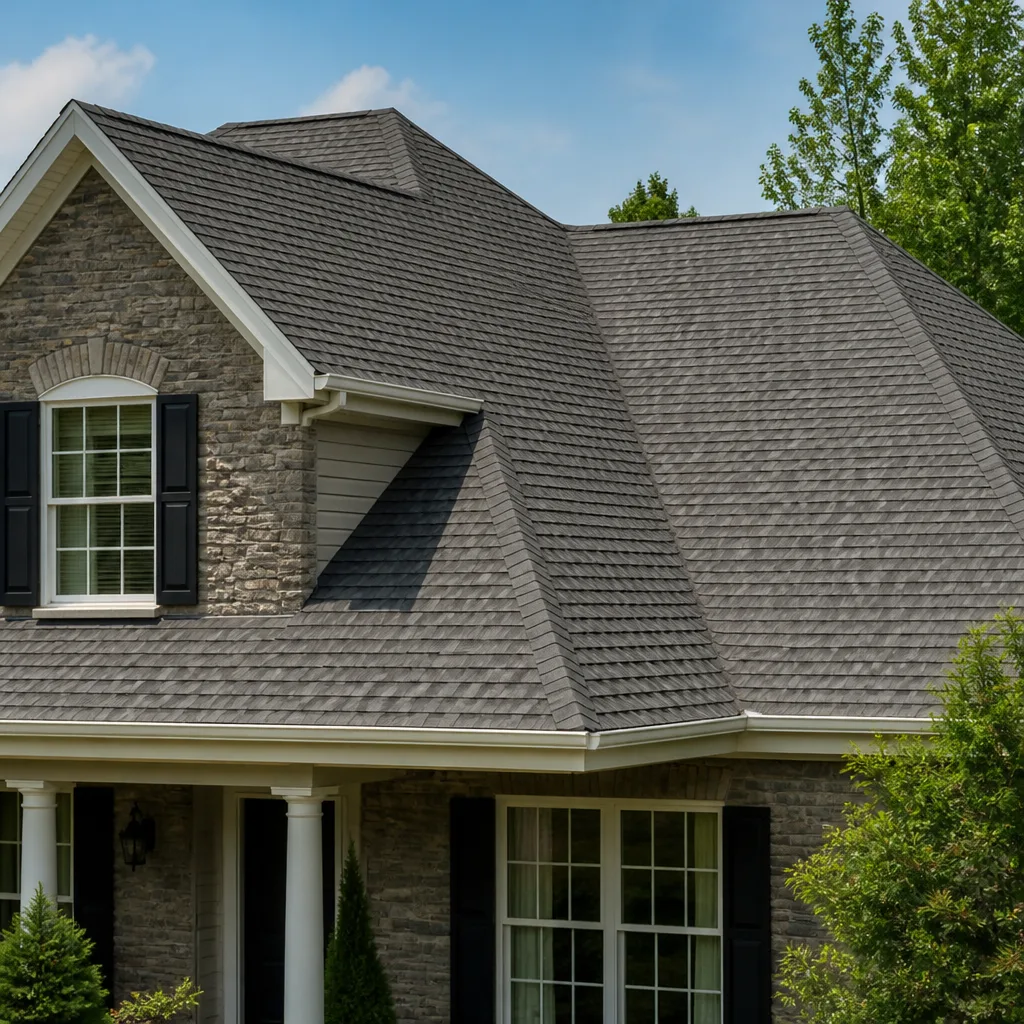 Architectural shingles
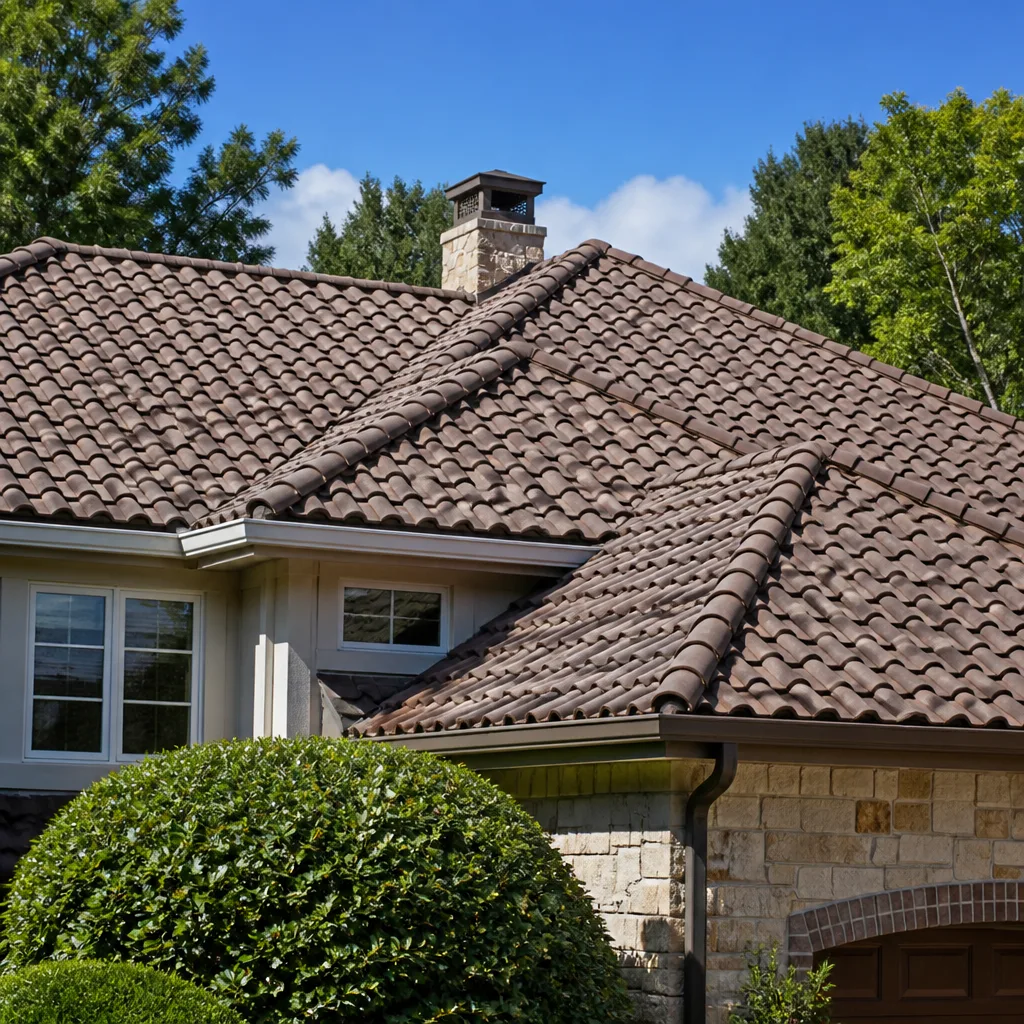 Tile roofing
 GAF
GAF Owens Corning
 Flat & low-slope
Free roof inspection with deck photos before we talk money - GAF and Owens Corning certified installation
CertainTeed Flashing Replacement: The Long Beach Owner’s Guide
We stock and install CertainTeed-compatible flashing replacement throughout Long Beach, and most standard repairs run $425 – $780 installed, usually completed in a single visit. Most homeowners discover a flashing problem the same way: a faint water stain on the ceiling that shows up a few days after rain, or dampness around a skylight or chimney that never quite dries out. It’s rarely dramatic at first, and that’s exactly why flashing failures in Long Beach tend to get worse before they get caught. The good news is that a proper flashing replacement is a contained repair, not a roof replacement. Dylan Pace and our crew at Crestview Roofing Co Long Beach have handled hundreds of these since 2000, and we’ll show you photos of the failed metal before we touch it and photos of the new flashing after it’s sealed.
Which CertainTeed Models This Applies To
Flashing isn’t tied to a specific CertainTeed shingle model the way a ridge cap or starter strip is. It’s the metal that seals the joints where your roof meets a vertical surface: chimneys, skylights, vent pipes, walls, and valleys. That said, the flashing we install has to work with your CertainTeed roof system, and the specific detail matters. CertainTeed’s Integrity Roof System spec calls for corrosion-resistant metal at all penetrations, and we match that standard whether your roof carries Landmark, XT 25, Presidential Shake, or Grand Manor. The practical gotcha for Long Beach homeowners: coastal air corrodes standard galvanized flashing noticeably faster than inland neighborhoods. In Naples and Belmont Shore especially, we regularly replace flashing that’s corroded through in 12 to 15 years, where the same material would last 20-plus in Bixby Knolls. We stock both OEM-compatible CertainTeed flashing components and quality aftermarket equivalents in 26-gauge and 30-mil thicknesses, so you’re never forced to wait on a special order when a chimney is actively leaking.
Here’s what to know about identifying the right flashing for your roof:
- Step flashing at chimneys and walls: sold in pieces sized to your shingle exposure, typically 4″ x 4″ x 8″ or 5″ x 5″ x 10″. CertainTeed’s installation specs require a minimum 4-inch vertical leg on wall flashing. If the flashing on your roof has a shorter leg, that’s often the exact reason it’s leaking.
- Pipe boot flashing: matches the diameter of your vent stack, commonly 1.5″, 2″, 3″, or 4″. The rubber collar degrades in coastal sun long before the metal base does. We carry all standard sizes on the truck.
- Valley flashing: either W-style metal valleys or woven shingle valleys depending on your CertainTeed system. W-style metal is the more common failure point in Long Beach because salt air attacks the exposed metal edges.
- Skylight flashing: if your skylight is a CertainTeed or Velux unit, the flashing kit is model-specific. We’ll need the skylight make and rough opening size to match it correctly.
Crestview Roofing Co Long Beach is an independent roofing contractor. We’re not affiliated with CertainTeed, but we install and repair their systems every month and use flashing components that meet or exceed their published installation specifications.
Styles & brands we work with
Signs Your CertainTeed Flashing Is Failing
- Water staining on ceilings or walls after rain. This is the classic first sign. The stain usually appears offset from the actual leak because water travels along roof decking and rafters before it drops. The source is almost always a flashing joint that’s opened up or corroded through.
- Lifted or curling flashing at the chimney base. Long Beach’s temperature swings cause the metal to expand and contract against the masonry. Over years, the metal pulls away from the mortar and leaves a gap that wind-driven rain finds easily.
- Rust streaks or visible pinholes in exposed flashing. Salt in the marine layer accelerates oxidation on galvanized metal. Once pinholes form, the flashing is done, no amount of sealant stops that leak long-term.
- Granules from shingles collecting in gutters near flashing points. When flashing fails, water runs under shingles and breaks down the asphalt faster. You’ll see premature granule loss concentrated in one area rather than evenly across the roof.
- Damp or spongy roof decking visible from the attic. If you can access your attic, check the decking around chimneys and vents after a heavy rain. Soft or darkened wood tells you the flashing has been leaking for a while, even if you haven’t seen a ceiling stain yet.
See the difference
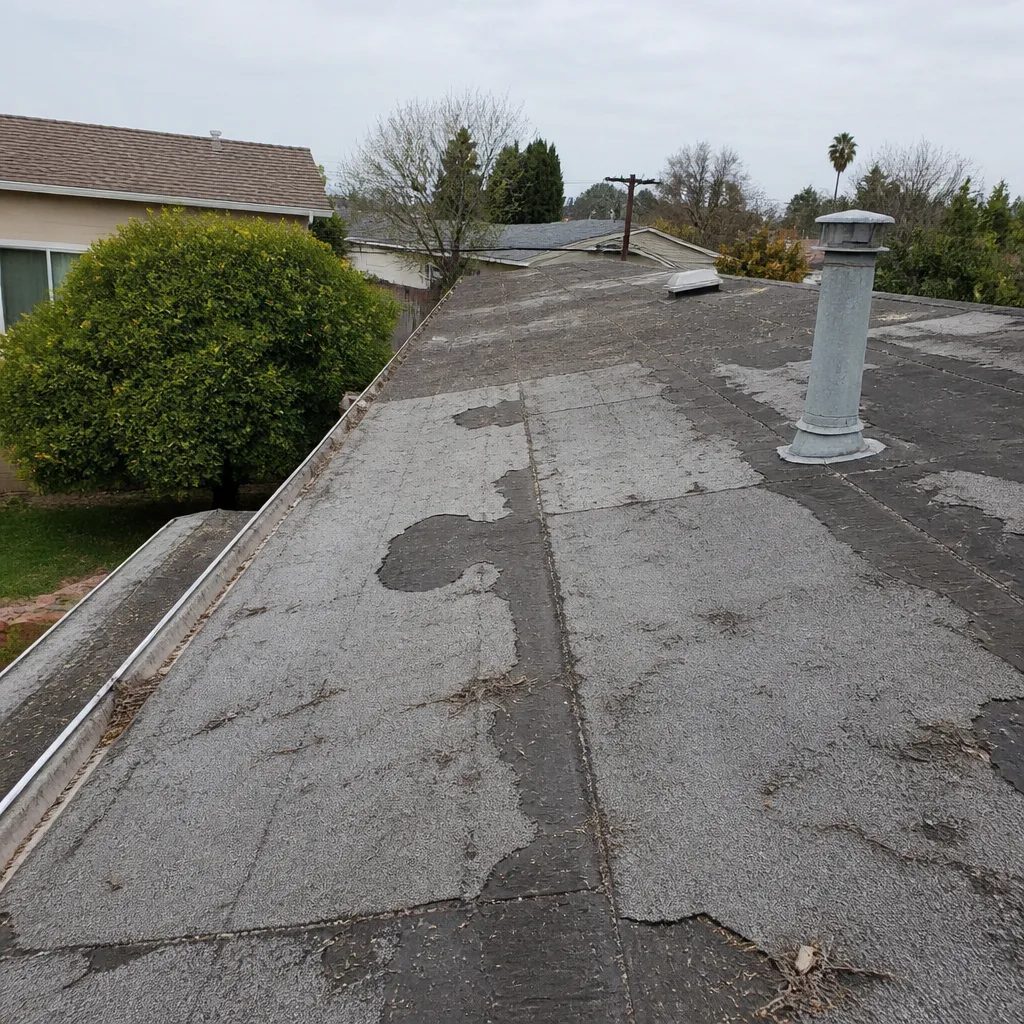 Before
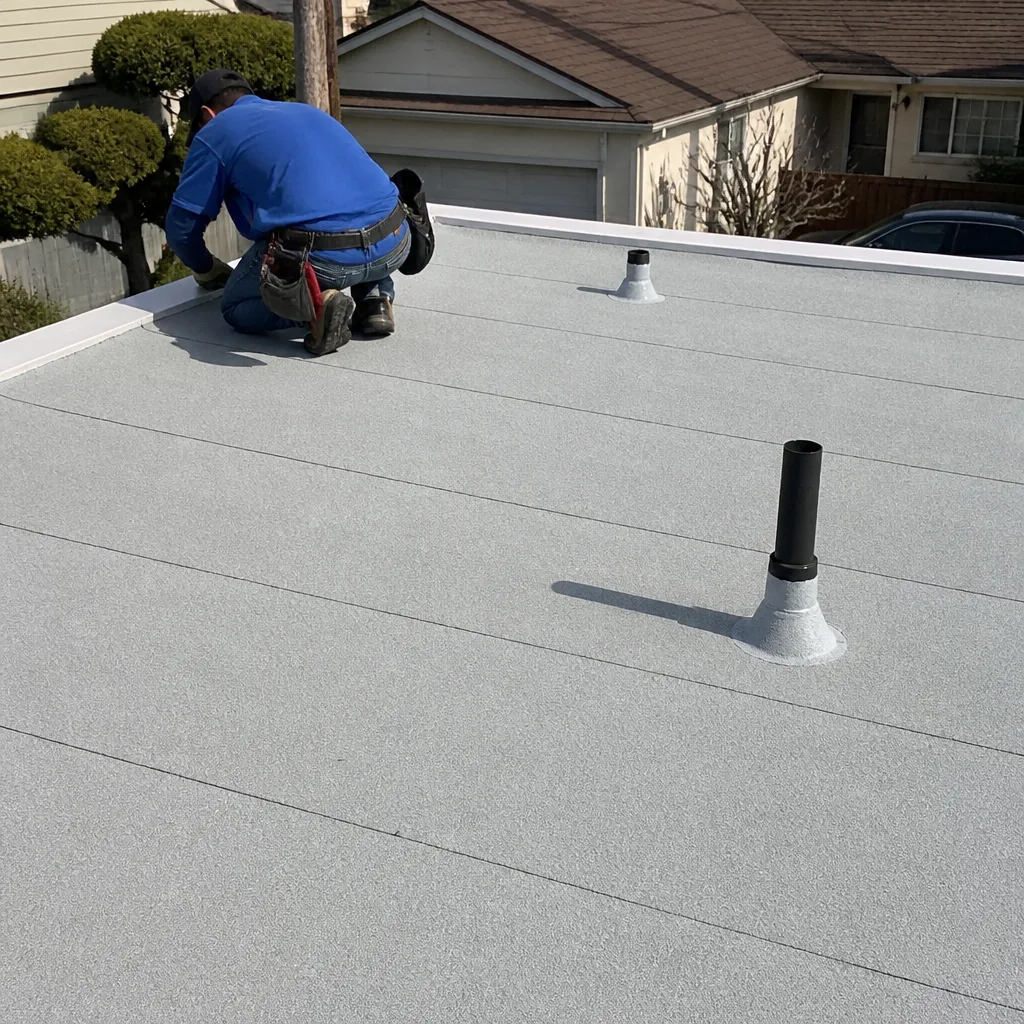 After
After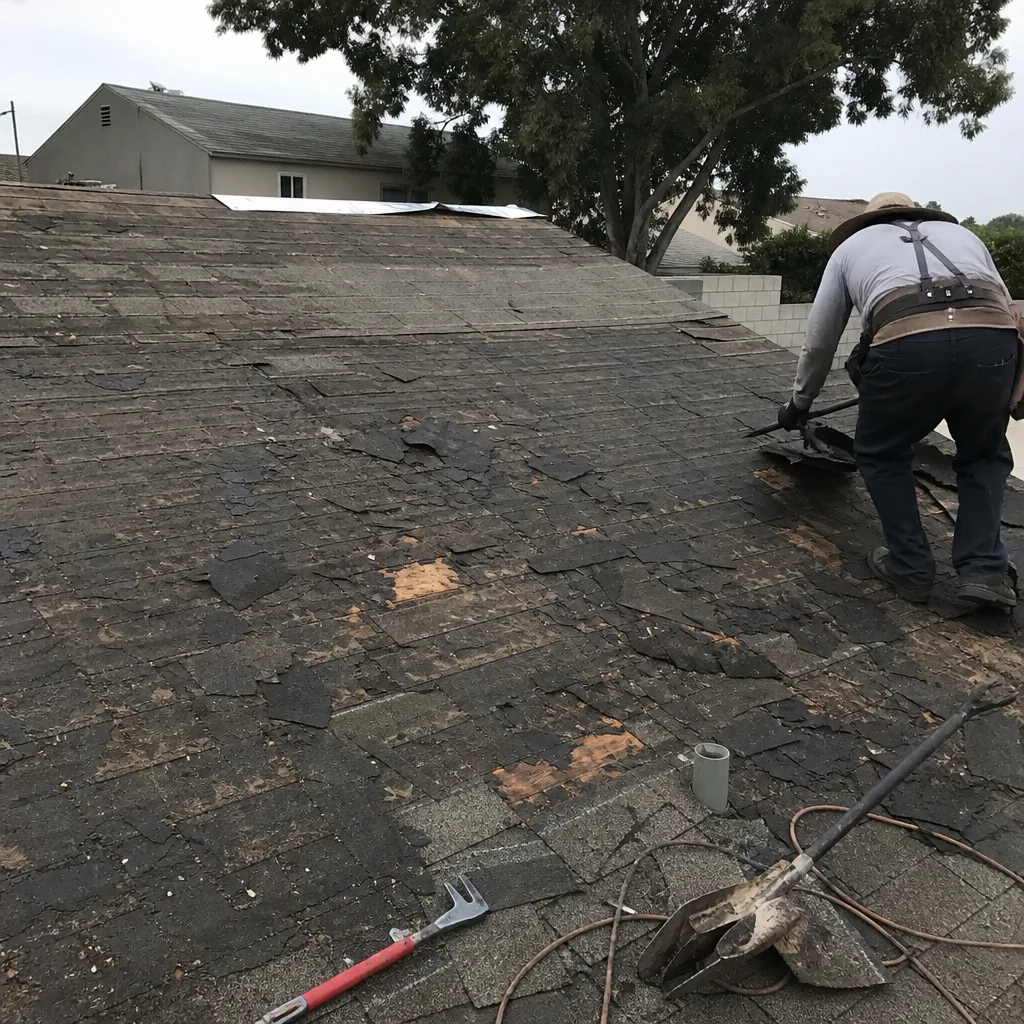 Before
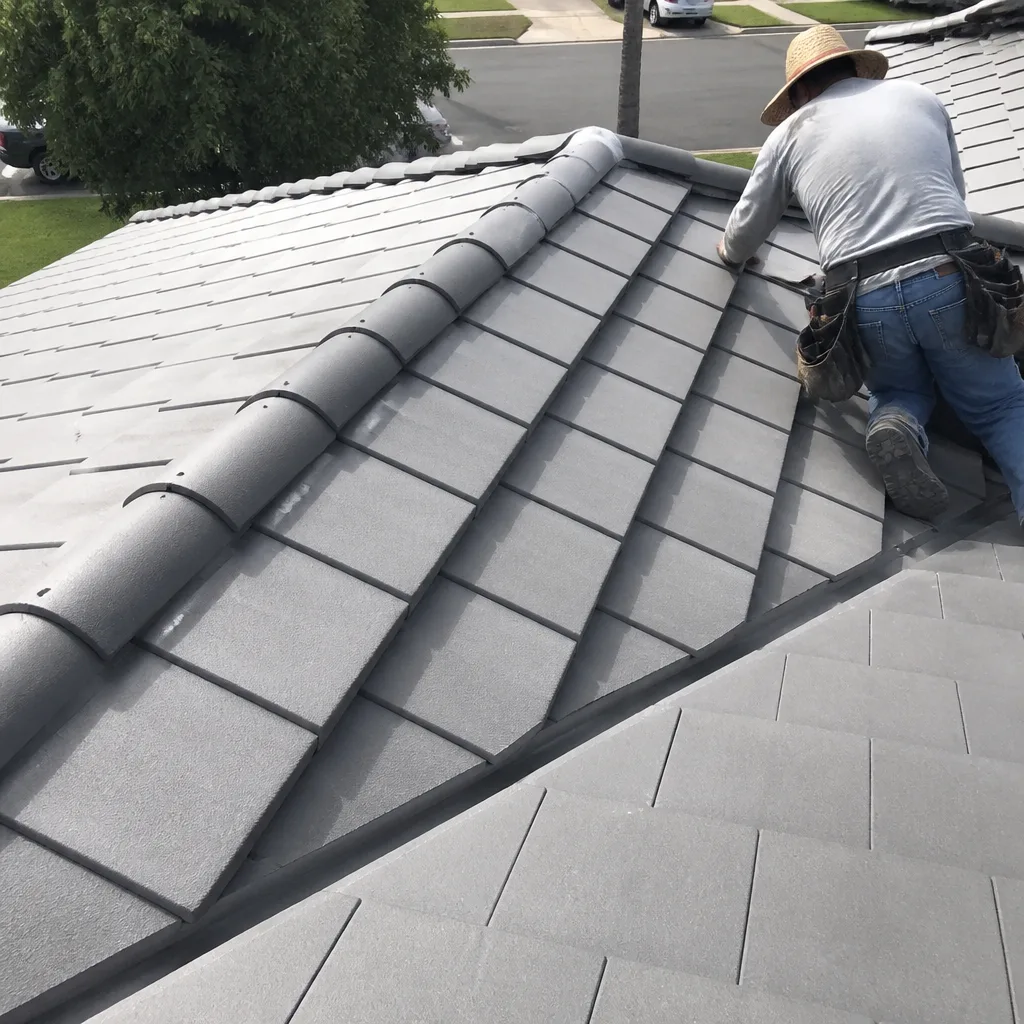 After
After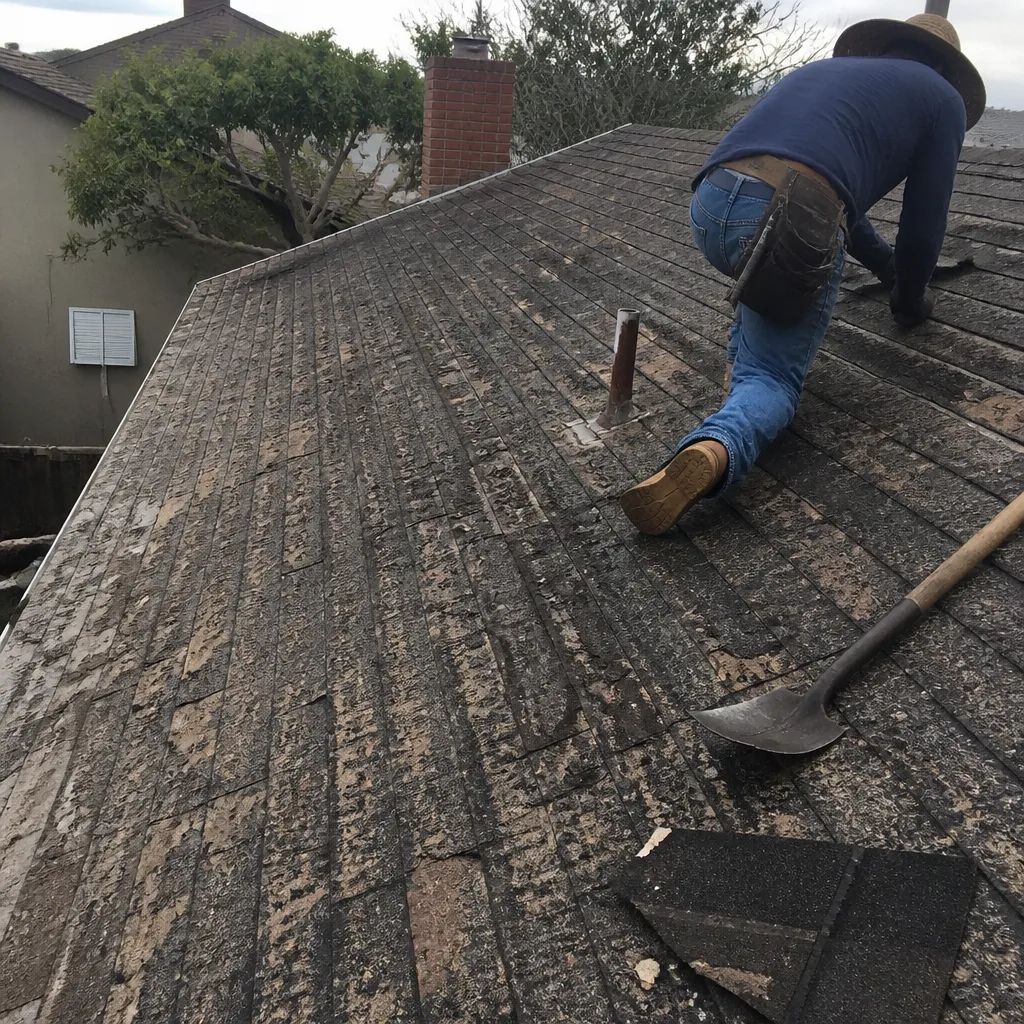 Before
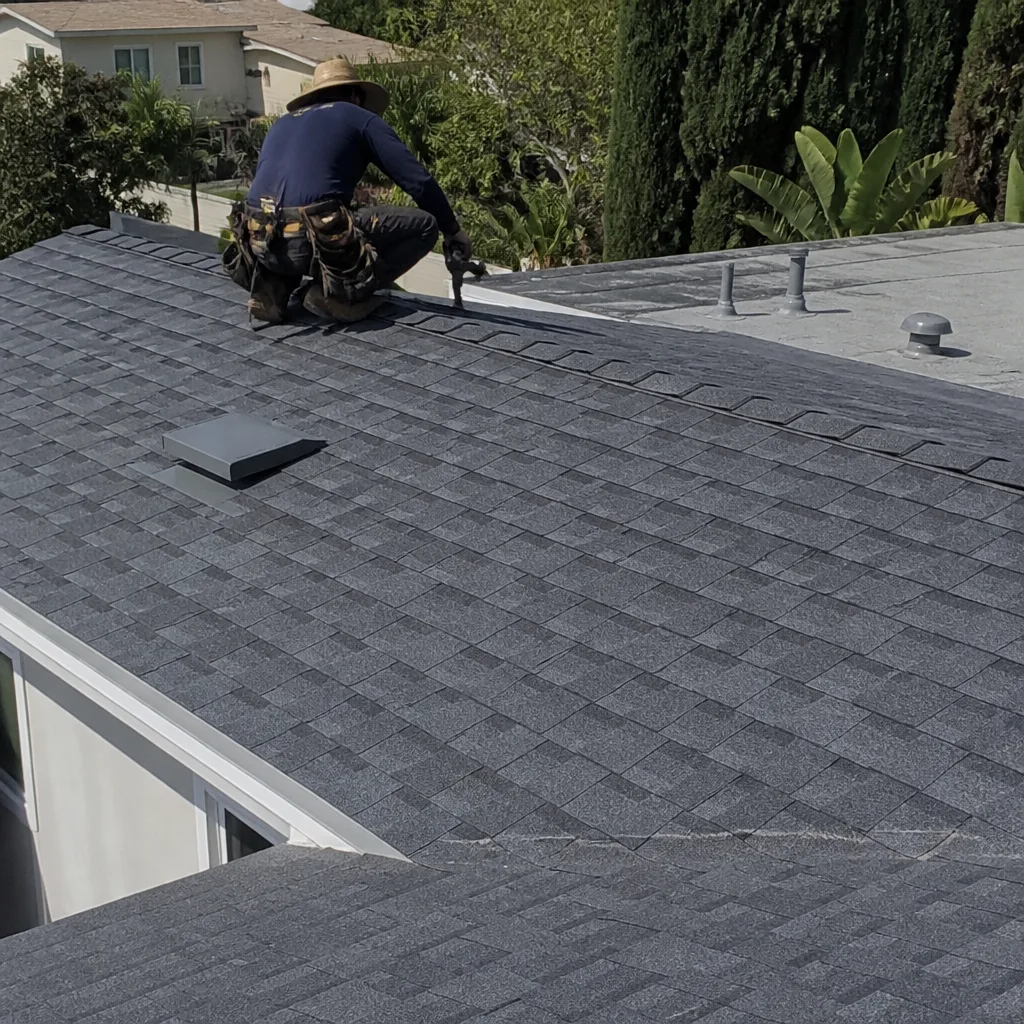 After
AfterReplacement Cost & What’s Included
In Long Beach, most flashing replacements run $425 – $780 installed depending on what’s failed and where it sits on your roofline. A single pipe boot replacement typically lands at the low end, around $425 – $550. Step flashing along a chimney or wall runs $500 – $700 when we’re replacing a run of 10 to 15 feet. A full chimney flashing system, including new counterflashing cut into the mortar joint, runs $650 – $780. If decking underneath has rotted, we’ll show you photos and quote the repair as a separate line item before any work proceeds.
Every quote includes the parts, labor, roof access protection, cleanup, and a written line-item price delivered before work starts. That price is the price, no change orders unless you approve something in writing first. And every flashing replacement carries our 365-Day Done Right Promise: if the repair fails within a year, we return and correct it at no charge. That’s in writing on every job, including a free second visit if the repair doesn’t hold.
DIY or Call Us?
You can safely check a few things yourself from the ground or from an attic access point: look for rust streaks on exposed flashing, check for daylight coming through at vent pipes, and note any ceiling stains after rain. What you shouldn’t do is get on the roof with a caulk gun and try sealing flashing yourself. Roof sealant applied over failed flashing is a temporary patch that masks the problem while water keeps working underneath. Worse, working on a pitched roof in Long Beach, especially a two-story home in neighborhoods like Los Altos or near CSULB, without proper tie-offs and roof brackets is how people end up in emergency rooms. Flashing replacement requires removing shingle courses, cutting step flashing to the correct exposure, and sealing in the right sequence. That’s a professional repair, and we make it simple: call (562) 471-4832, we schedule a time that works, you get a live arrival link before we show up, and a written price before we start.
FAQs
Galvanized flashing in Long Beach typically lasts 12 to 20 years depending on proximity to the coast, while higher-grade aluminum or 26-gauge steel flashing can last 25 to 30 years. Coastal neighborhoods like Peninsula and Belmont Shore see faster corrosion because of salt in the marine air. Call (562) 471-4832 and we’ll inspect your flashing and tell you honestly how much life it has left.
In most cases, failed flashing should be replaced rather than resealed, because sealant breaks down and the leak returns. Small gaps in otherwise sound metal can sometimes be re-secured, but if the flashing is rusted, lifted, or corrosion-pitted, a proper replacement with new step flashing or counterflashing is the only fix that holds.
A single pipe boot swap takes under an hour. Step flashing along a chimney or wall typically takes two to four hours. A full chimney flashing system with counterflashing cut into the mortar can take a half day. We’ll give you a clear time window before the job and a live trackable arrival time so you’re not waiting around.
We carry standard step flashing sizes, pipe boots, valley metal, and counterflashing on our trucks, which means most CertainTeed flashing replacements are done same-visit. If your skylight or penetration requires a model-specific flashing kit, we’ll source it and schedule the install as soon as it arrives. Call (562) 471-4832 and tell us what’s leaking, we’ll tell you exactly what we need to fix it and what it will cost.
Written by Dylan Pace, Owner, Crestview Roofing Co Long Beach at Crestview Roofing Co Long Beach, serving Long Beach and nearby areas.