
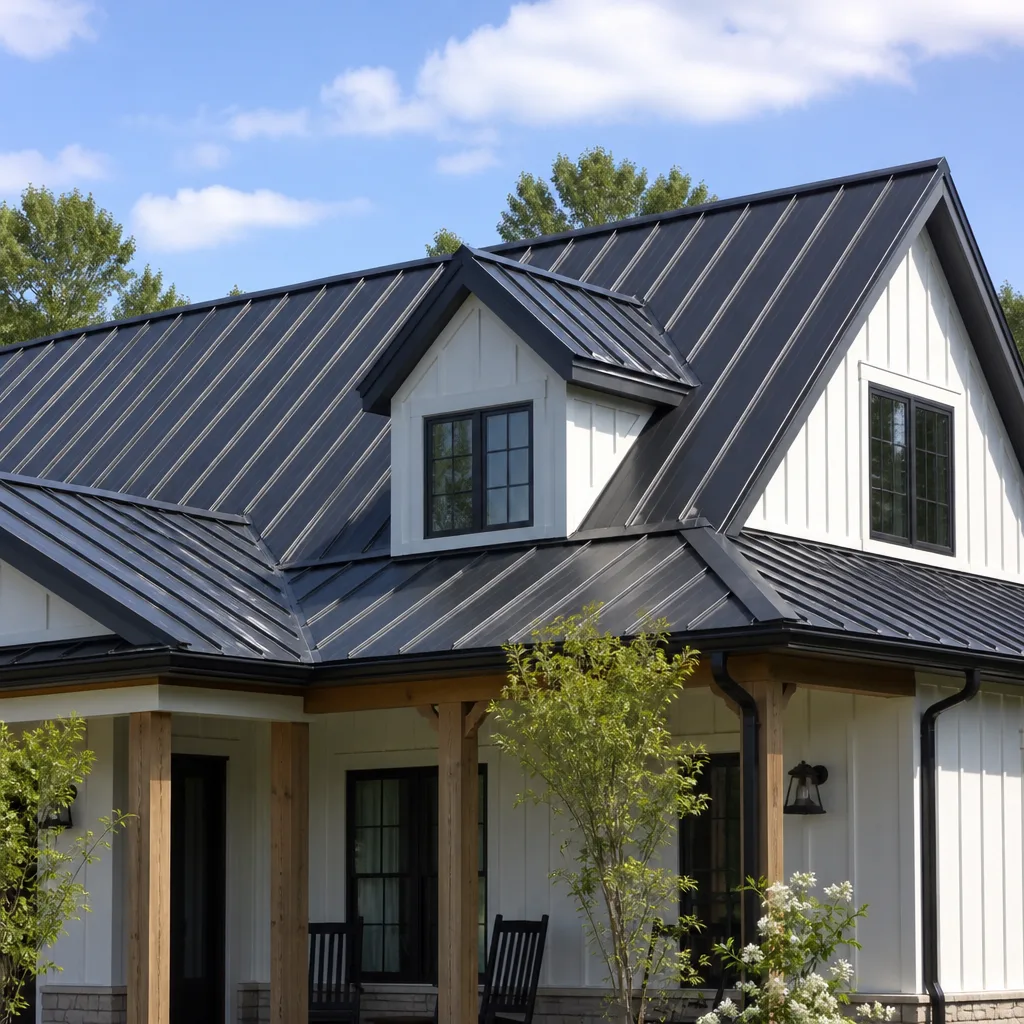
 Metal roofing
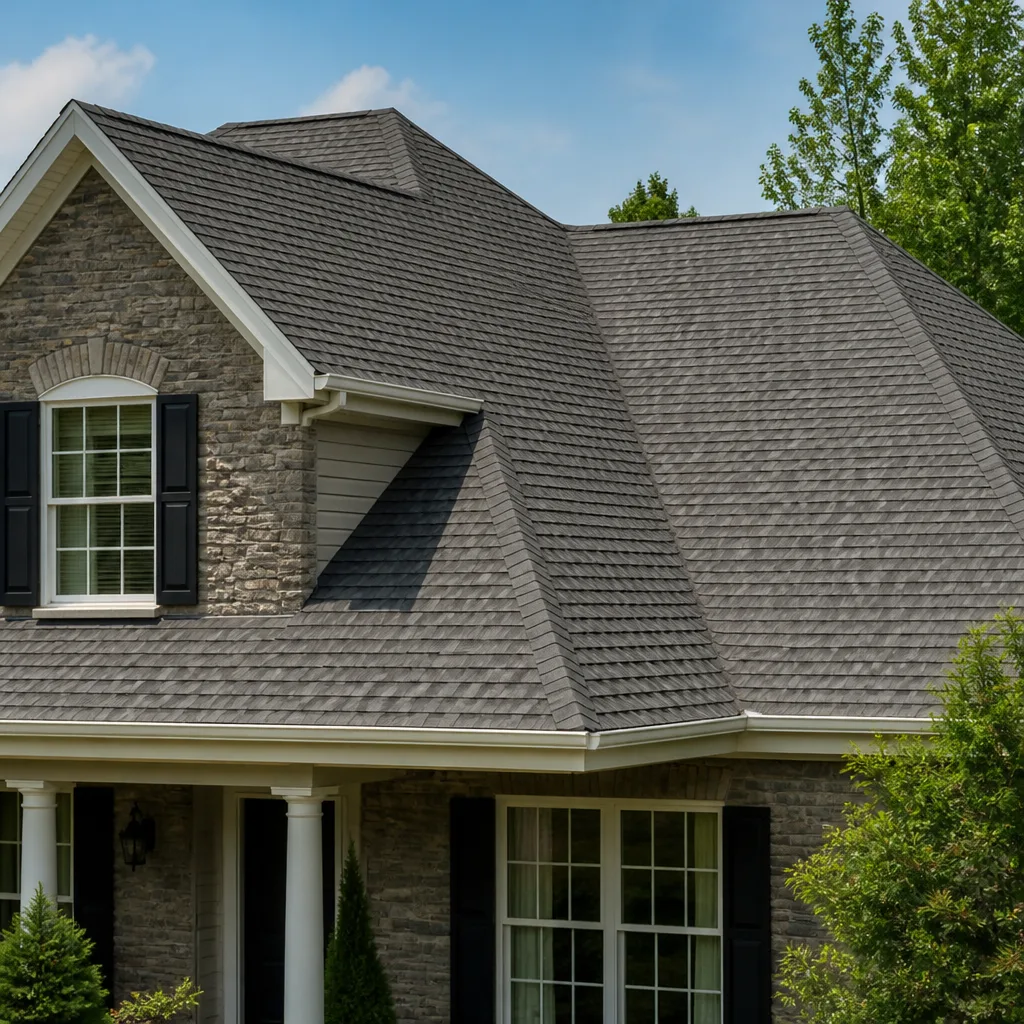 Architectural shingles
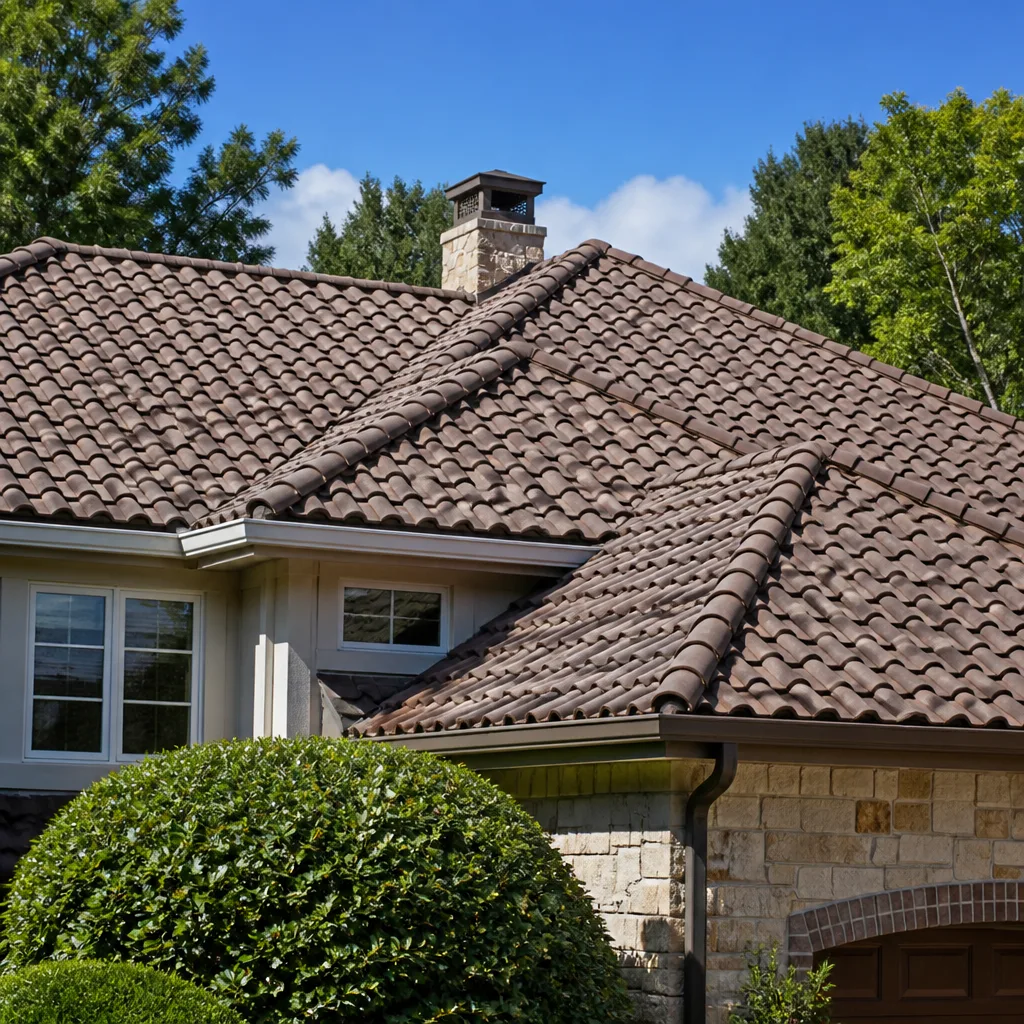 Tile roofing
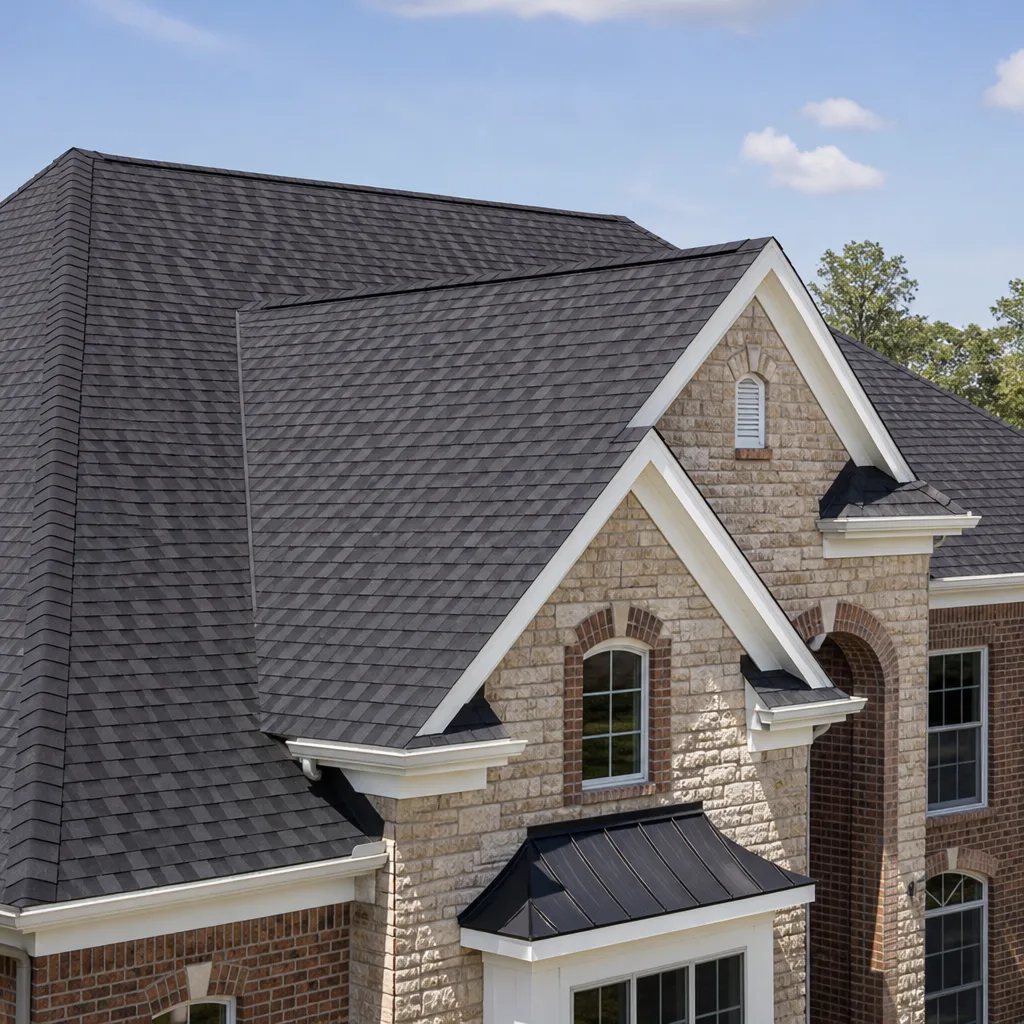 GAF
GAF Owens Corning
 Flat & low-slope
Free roof inspection with deck photos before we talk money - GAF and Owens Corning certified installation
Boral Underlayment & Deck Repair: The Long Beach Owner’s Guide
Boral underlayment and deck repair in Long Beach typically runs $900 – $2,600 installed, depending on how much decking has to come up and what the substrate looks like underneath. We stock Boral-compatible underlayment on our trucks and can usually get most repairs done in a single visit. The way most Long Beach homeowners discover the problem is the same: a soft spot near a roof penetration, a musty smell in the attic after a heavy marine-layer stretch, or water staining on a ceiling that has no business being wet.
Boral underlayment is a self-adhering, modified bitumen membrane that sits between your roof deck and the finished roof surface. It’s your last line of defense when water gets past the shingles or tiles. When it fails, the decking beneath it starts to rot. And in Long Beach, where morning fog can sit on a roof for hours before the sun burns it off, trapped moisture turns a small underlayment tear into a full deck replacement faster than people expect.
Key Takeaways
- Boral underlayment failures almost always start at seams, fasteners, or penetrations, not in the middle of the field.
- If the decking below is compromised, the repair gets more expensive fast. Catching it early matters.
- We give a written price before work starts. The number you approve is the number on the invoice.
- Every repair is covered by our 365-Day Done Right Promise, in writing.
Which Boral Models This Applies To
Boral manufactures underlayment for both steep-slope and low-slope applications. The two you’ll most commonly see under Long Beach roofs are Boral’s self-adhered modified bitumen sheets (often paired with their concrete and clay tile systems) and the synthetic underlayments used under Boral’s slate and shake profiles. The compatibility gotcha is this: Boral concrete tile systems have very specific underlayment requirements because the tiles are heavy and expand and contract with heat. Using a generic 30-lb felt under a Boral tile roof will fail years before a proper Boral-spec underlayment will.
When you check your product, look for the roll label or the stamp printed along the selvedge edge. That tells us the exact product number and batch. If the label is gone, we can measure the roll width (typically 36 or 39 inches for Boral’s modified products) and match by membrane type. For OEM versus aftermarket, we recommend staying with a Boral-matched membrane under any Boral tile system. Aftermarket self-adhered membranes can work under composition shingles, but tile systems put different demands on the underlayment, and we’ve seen cheap substitutions delaminate within five years in coastal air.
Styles & brands we work with
Signs Your Boral Underlayment & Deck Repair Is Failing
- Water staining on ceilings below the roof, especially near eaves or valleys. This means water has gotten past the roof surface AND the underlayment AND through the deck. By this point, you’re replacing decking, not just membrane.
- A soft spot when walking the roof near chimneys, vents, or skylights. Penetrations are where most underlayment failures begin. The flashing may be fine, but if the underlayment wasn’t sealed properly at the penetration, the deck rots from the underside out.
- Musty odor in the attic that gets stronger after rain or fog. Long Beach’s marine layer can condense on the underside of the deck if the underlayment has trapped moisture. You’re smelling mold activity in the plywood itself.
- Granules or tile fragments collecting in gutters with no visible roof surface damage. Sometimes the surface looks fine but the underlayment has separated, letting the surface material shift microscopically and shed. The underlayment is no longer bonding to the deck.
- Visible underlayment at the eaves, curled or peeling, especially on south-facing roof planes. The sun is brutal on exposed underlayment edges. Once it curls at the drip line, water wicks up and under the roof edge every time it rains.
See the difference
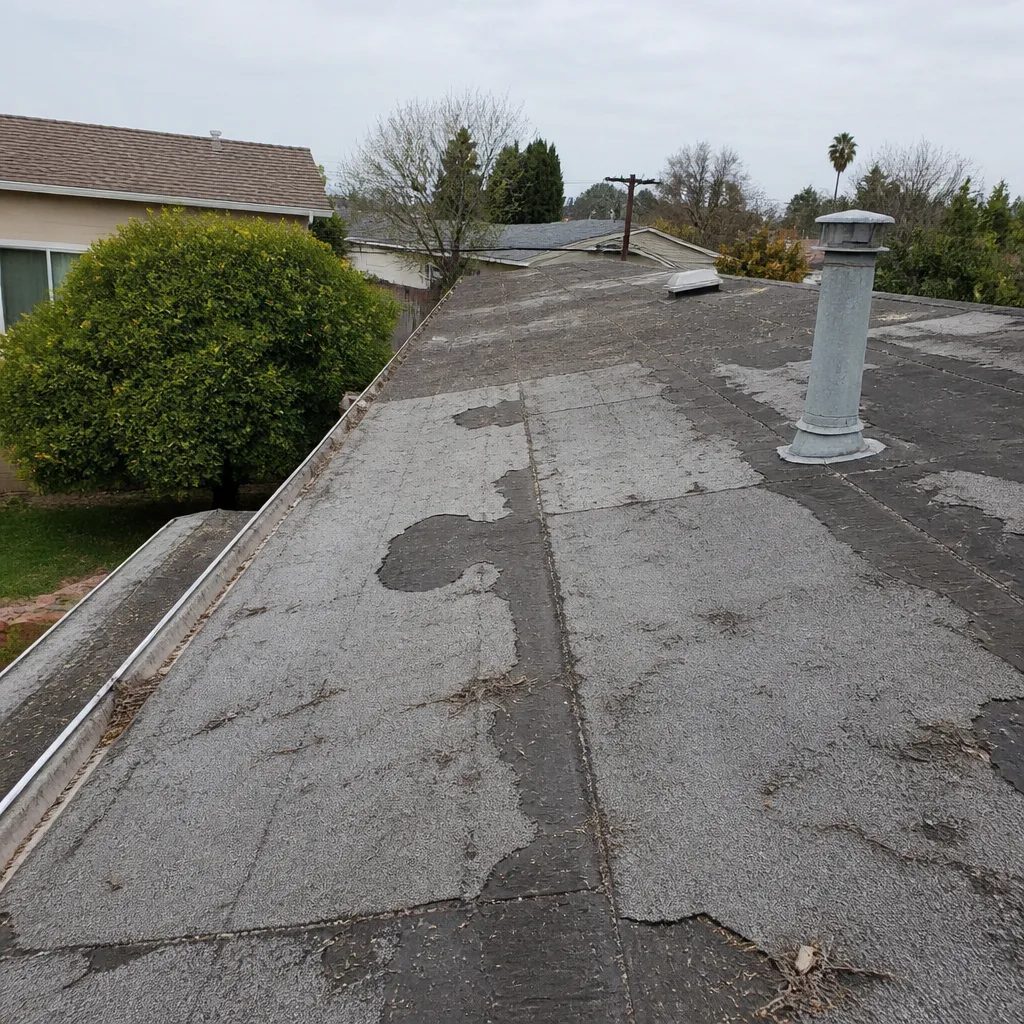 Before
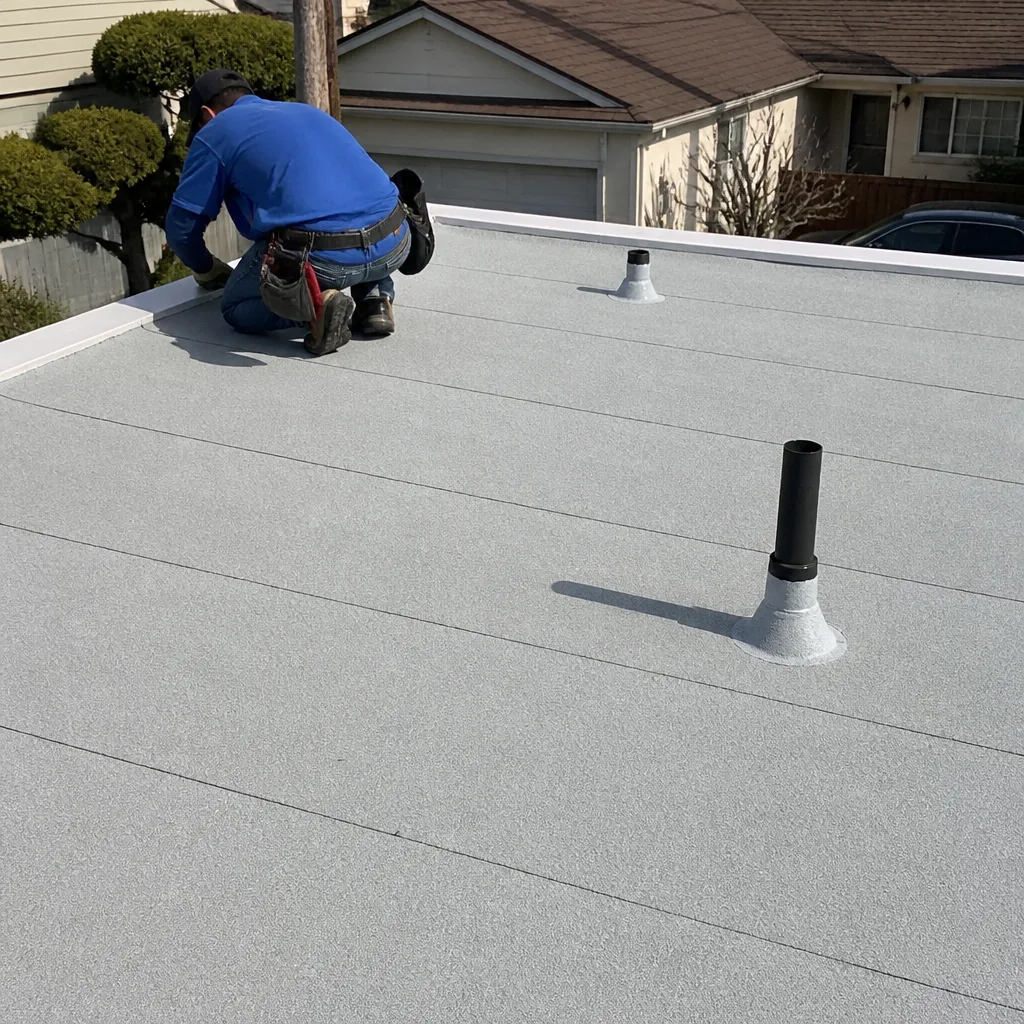 After
After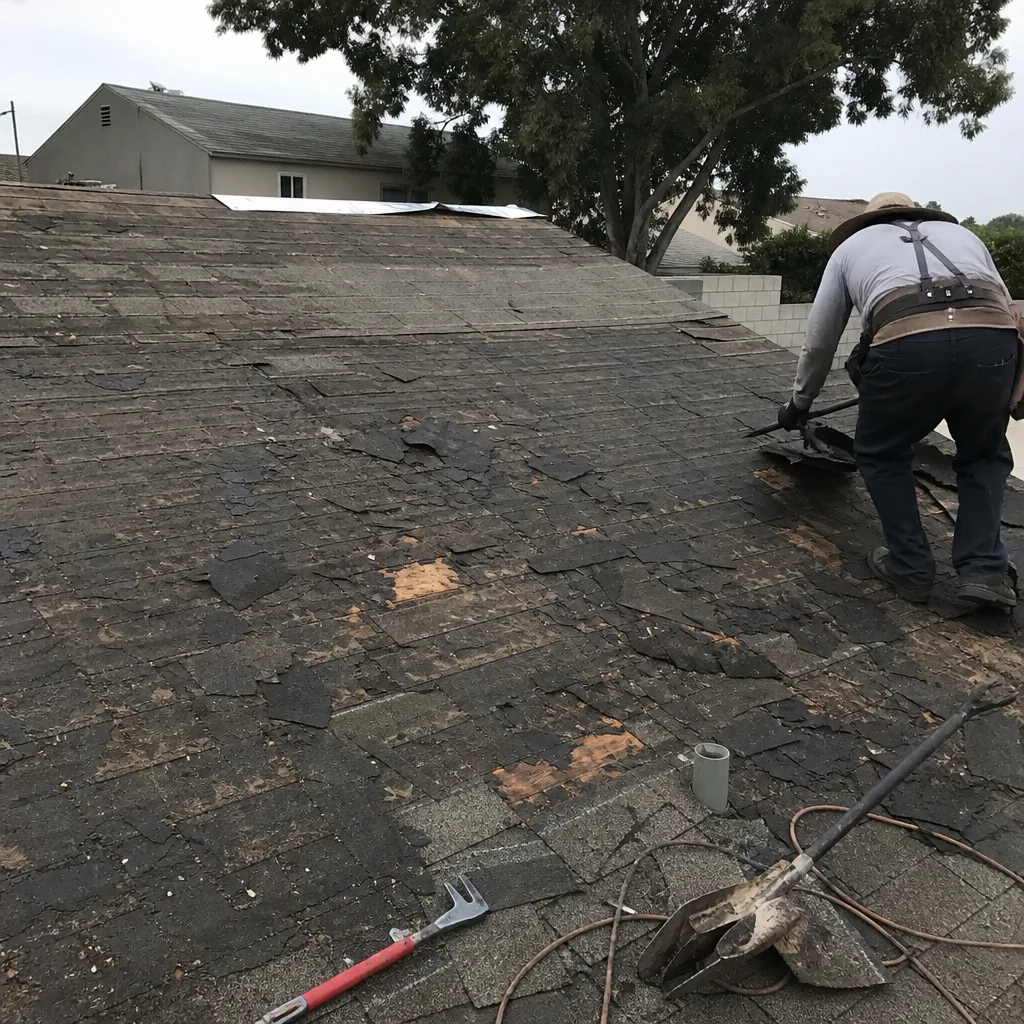 Before
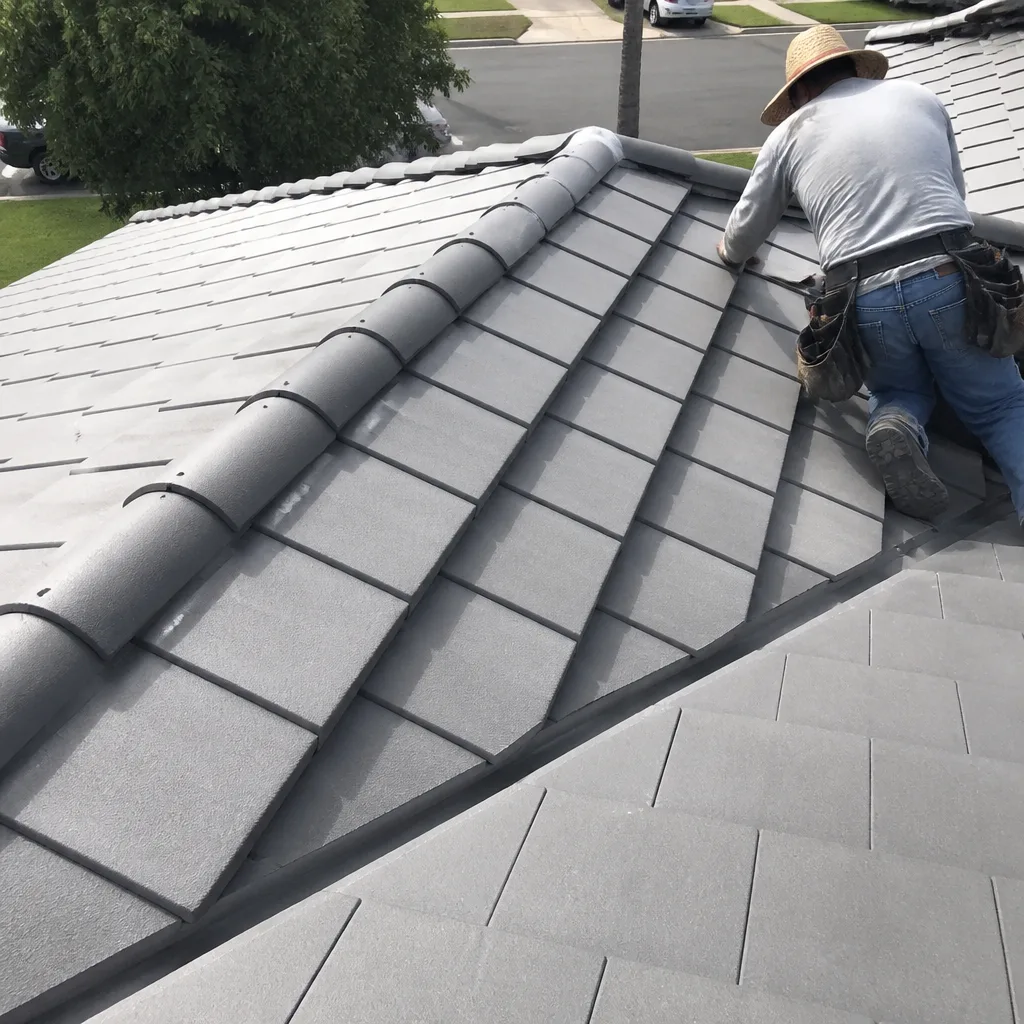 After
After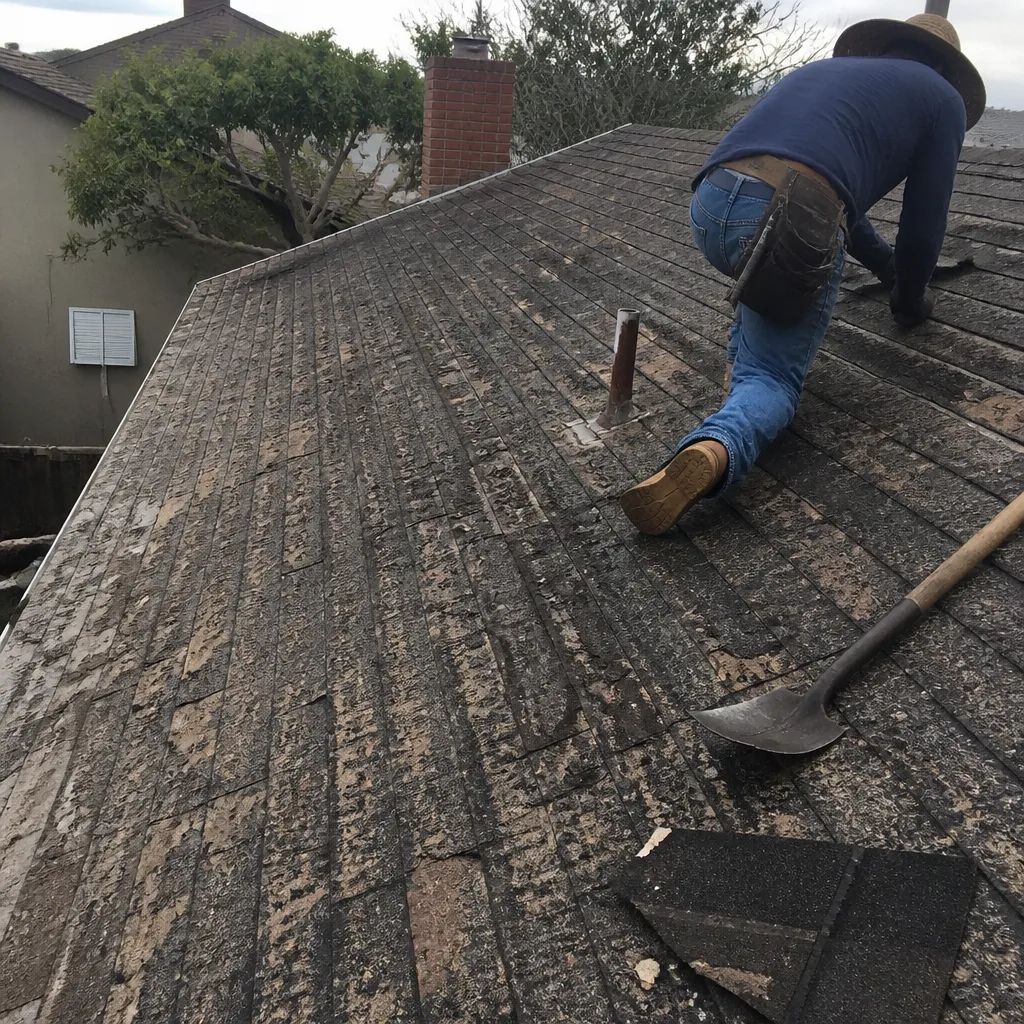 Before
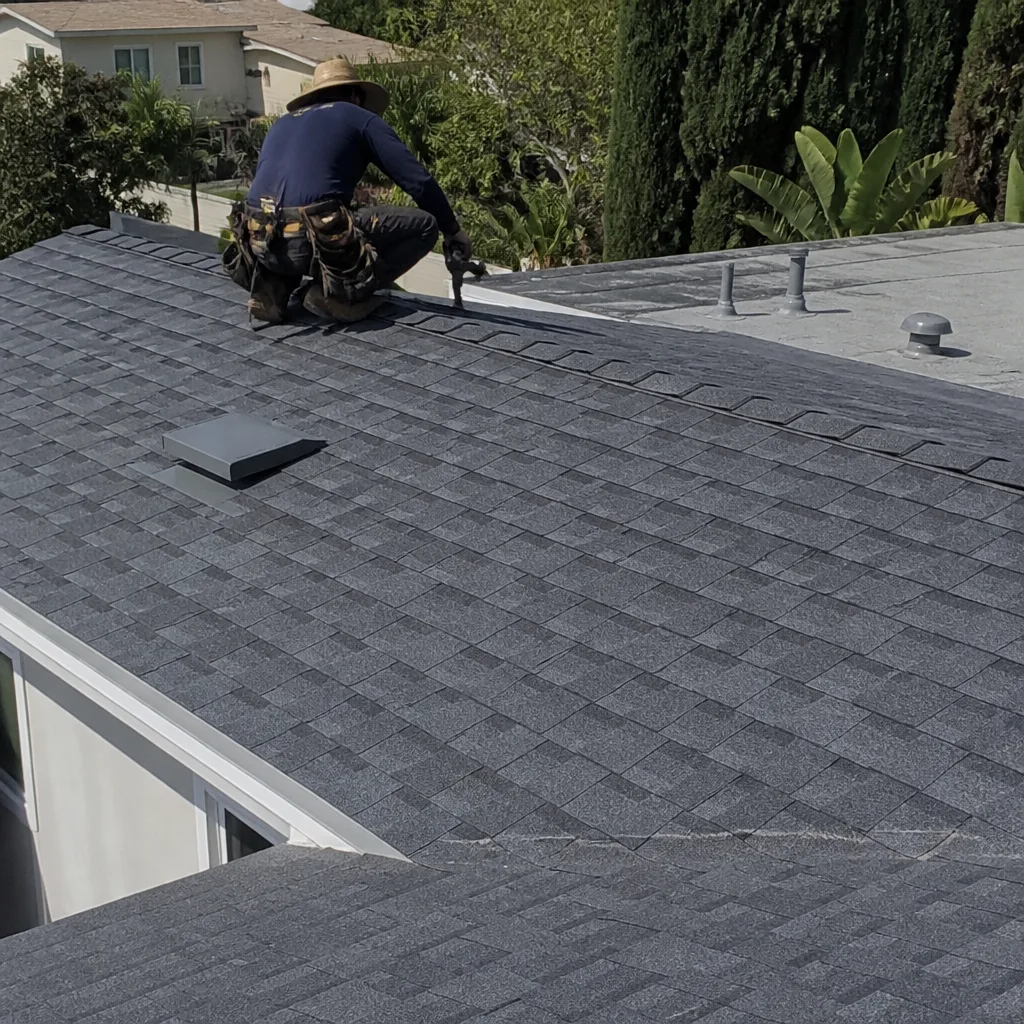 After
AfterReplacement Cost & What’s Included
In Long Beach, expect to pay $4 – $8 per square foot for underlayment replacement combined with deck repair, where “per square foot” covers both materials and labor. A small repair around a single penetration might land around $900 – $1,400. A larger section, say 150 square feet with deck replacement, runs $1,800 – $2,600. The main cost driver is always decking. If the plywood or OSB under the membrane is rotten, it has to be cut out and replaced before the new underlayment goes down. You can’t glue new membrane to crumbling wood.
What’s included: we remove the roof surface over the affected area, cut out any compromised decking, install new CDX or OSB to match the existing thickness, apply Boral-compatible underlayment with proper overlap and end laps, and then reinstate the roof surface. We document everything with before-and-after photos and send a digital invoice by text, per The Relay Standard. The written price you approve before we start is the price you pay at the end. No change orders, no surprise add-ons.
DIY or Call Us?
If you want to check things yourself, you can look for the warning signs from inside the attic: water streaks on the underside of the deck, dark staining around fastener heads, or daylight visible through gaps near penetrations. You can also inspect the eaves from a ladder to see if underlayment is curling or missing at the drip edge. What you should not do is peel back the roof surface and try to replace underlayment yourself, especially on a tile roof. Boral concrete tiles can weigh 600 – 1,000 pounds per square, and removing them without the right tools creates a fall hazard for you and damage risk for the roof. We have seen homeowners step through soft decking that looked solid from above. If you’re unsure, call us at (562) 471-4832 and we’ll do an honest assessment. Dylan Pace will climb up, take photos, and show you exactly what’s going on before you spend a dollar.
FAQs
A properly installed Boral underlayment under a tile or slate roof can last 30 – 50 years in Long Beach’s climate, but only if the roof surface above it stays intact and the underlayment is protected from direct sun exposure at eaves and penetrations. The weak points are always the edges and the penetrations, not the field of the membrane. Call (562) 471-4832 and we’ll inspect your specific roof condition for free with the estimate.
Yes, if the damage is localized. We can remove the roof surface over the affected area, splice in new Boral-compatible underlayment with proper overlaps, and reinstate the surface. The key is that the new underlayment must lap over the old by at least 6 inches in the direction of water flow. If the deck under the damaged underlayment is rotten, that section of decking gets replaced too. Call (562) 471-4832 and we’ll tell you what your specific situation requires.
Most underlayment and deck repairs we do in Long Beach take one day. A larger section with significant deck replacement might run into a second day, especially if we’re matching concrete tiles that need careful reinstatement. We’ll give you a clear timeline in writing before we start. Call (562) 471-4832 for a free estimate and we’ll schedule a window that works for you.
We stock Boral-compatible self-adhered and synthetic underlayments on our trucks, along with the decking, fasteners, and sealants needed for typical repairs. We also work with GAF, Owens Corning, and CertainTeed underlayments when the roof calls for a different specification. If your specific Boral product isn’t on the truck when we arrive, we can usually have it same-day from our supplier. Call (562) 471-4832 and we’ll confirm what we’re bringing before we arrive.
If your Boral underlayment is failing, get ahead of it before the deck rots and the repair bill doubles. Call Crestview Roofing Co Long Beach at (562) 471-4832 for a free estimate. We’ll put everything in writing before any work starts, show you photos of what we find, and stand behind the repair for a full year. That’s the point of The Relay Visibility Guarantee: you know what you’re paying, who’s doing the work, and what you’re getting. If I wouldn’t put it on my own roof, I’m not putting it on yours.
Written by Dylan Pace, Owner, Crestview Roofing Co Long Beach at Crestview Roofing Co Long Beach, serving Long Beach and nearby areas.