
 Metal roofing
 Architectural shingles
 Tile roofing
 GAF
GAF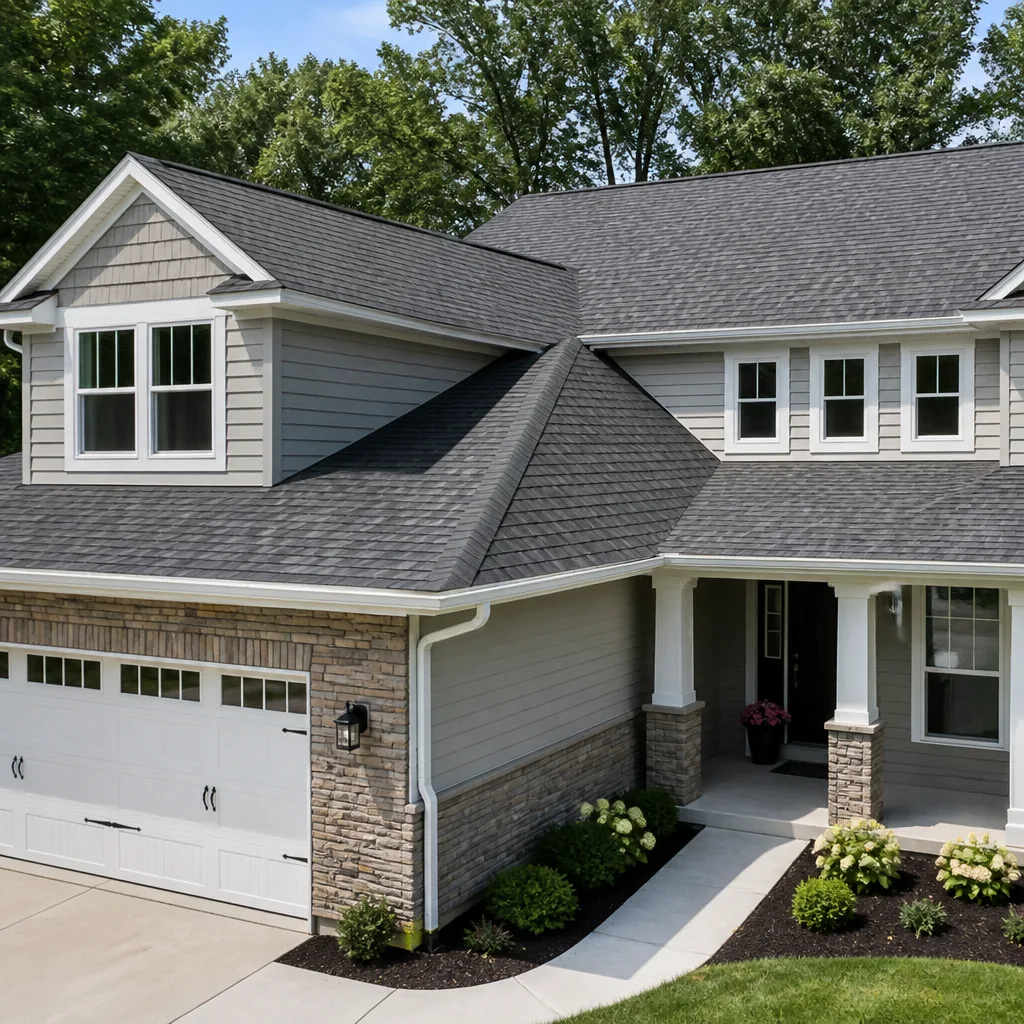 Owens Corning
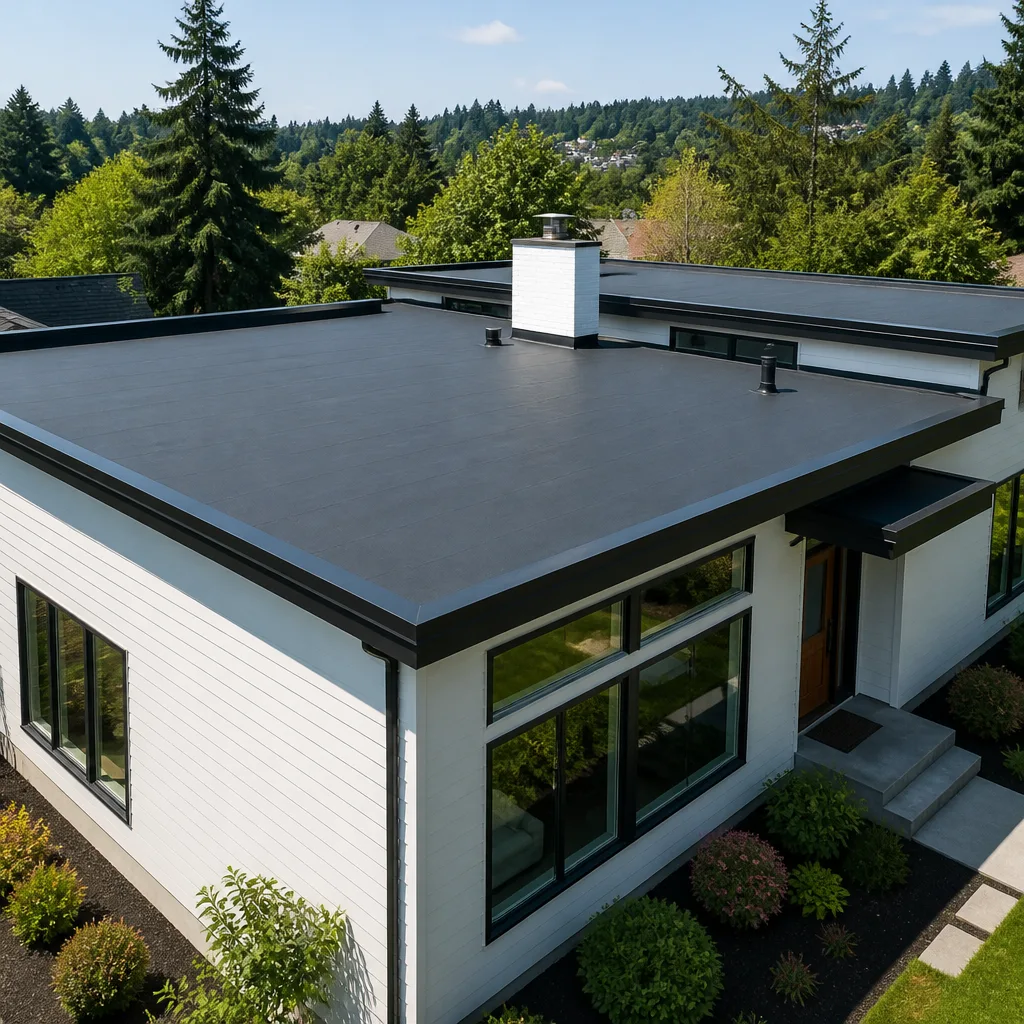 Flat & low-slope
Free roof inspection with deck photos before we talk money - GAF and Owens Corning certified installation
Tamko Flashing Replacement: The Long Beach Owner’s Guide
Tamko flashing replacement in Long Beach typically runs $350 to $900 installed, depending on which penetration is leaking and how much surrounding shingle has to be lifted. We stock Tamko-compatible flashing on our trucks most days, and most single-penetration swaps are done in one visit. The way homeowners usually find us is pretty consistent: a water stain appears on the ceiling after a heavy rain, or they spot curling metal around a pipe boot while cleaning gutters. Flashing is almost never the first thing to fail on a Tamko roof, but when it goes, it goes quietly and leaks for months before anyone notices.
Key Takeaways:
- Installed flashing replacement costs $350 – $900 in Long Beach, parts included
- Tamko shingles use standard 4″ – 6″ step flashing and 1.5″ – 3″ pipe boots, no proprietary sizing
- Coastal salt air shortens galvanized flashing life by roughly a third compared to inland
- Every replacement is covered by our 365-Day Done Right Promise in writing
Which Tamko Models This Applies To
Tamko flashing isn’t model-specific the way a car part is. Tamko manufactures shingles and underlayment, not a proprietary flashing line, so their Heritage, Elite Glass-Seal, and Titan XT series all use industry-standard flashing: 4-inch and 6-inch step flashing for walls, 10-by-10-inch galvanized or aluminum chimney flashing, and rubber pipe boots sized to 1.5-inch, 2-inch, or 3-inch vent pipes. The compatibility gotcha in Long Beach isn’t the shingle brand, it’s the material choice: this coastal air eats standard 26-gauge galvanized flashing in 12 to 15 years, while the same flashing inland might last 20. If your Tamko roof was installed before 2010 with builder-grade galvanized, the flashing is likely near the end of its service life even if the shingles have years left.
When we show up, we match two things: the existing flashing dimensions and the material grade. OEM Tamko shingles don’t require OEM flashing, and there’s no performance reason to pay a premium for “Tamko-branded” metal that Tamko doesn’t actually manufacture. A quality 26-gauge galvanized or .019 aluminum aftermarket equivalent performs the same, which is why we recommend it unless a specific warranty clause says otherwise. We also work with GAF, Owens Corning, and CertainTeed systems, so if you’ve had a partial re-roof mixed with Tamko, we can identify what’s up there without guessing.
Styles & brands we work with
Signs Your Tamko Flashing Replacement Is Failing
- Water stains on ceilings or walls after rain. This is the most common first sign. Flashing failures let water travel along roof decking before it shows up inside, often several feet from the actual leak. The stain may appear days after the rain stops.
- Rust, corrosion, or pinholes in visible metal. Long Beach’s salt-heavy marine layer accelerates rust on galvanized flashing, especially on ocean-facing roof slopes. Pinholes might look cosmetic, but they let water through slowly and continuously.
- Curling, lifting, or separated step flashing along walls and chimneys. Expansion and contraction from our hot days and cool nights gradually pulls flashing away from sealant joints. Once the metal lifts, water follows the gap by capillary action.
- Cracked or hardened rubber around pipe boots. The rubber collar on a vent pipe boot degrades from UV exposure and salt air, usually in 10 to 15 years here. Cracks at the base of the pipe are a direct water entry point.
- Granules or shingle damage around flashing joints. Water that gets under flashing rots the shingle matting over time. If shingles near a penetration look blistered, dark, or bare of granules, the flashing above has probably been leaking for a while.
See the difference
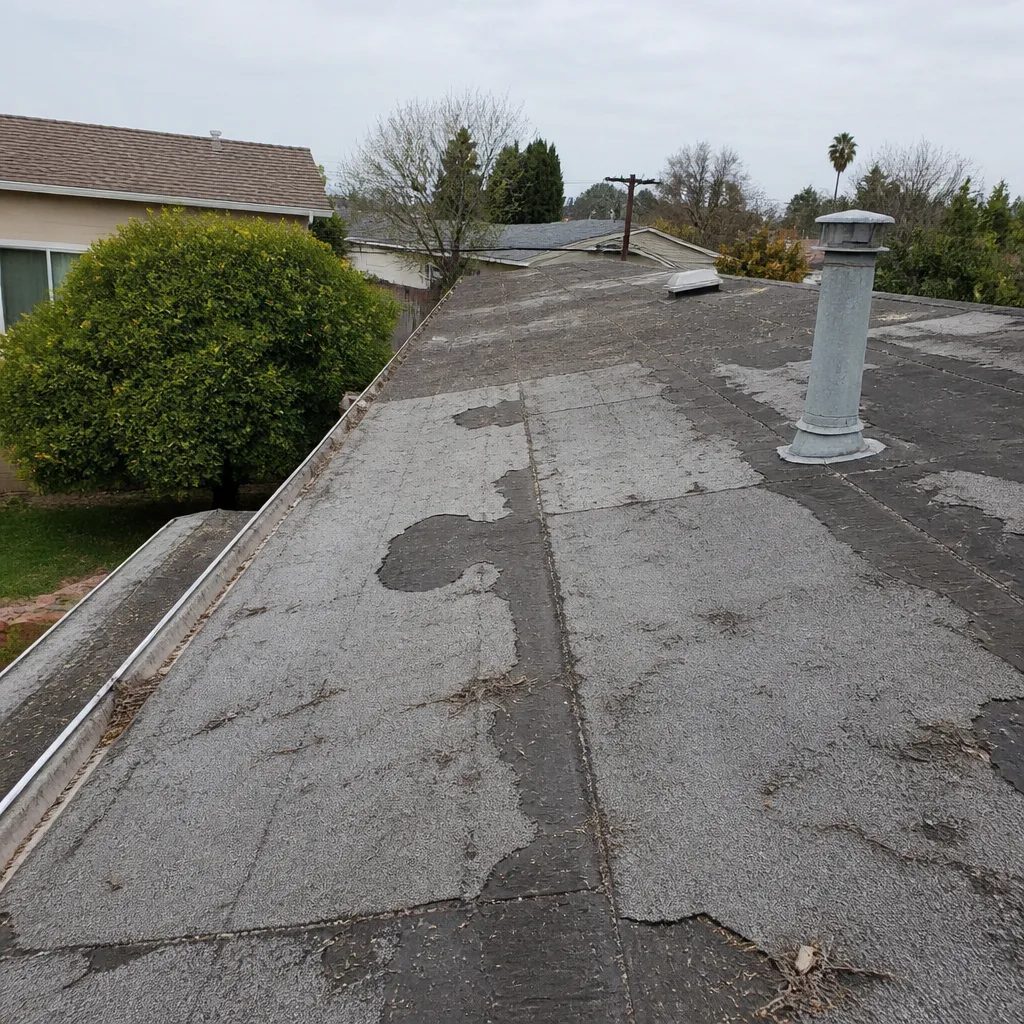 Before
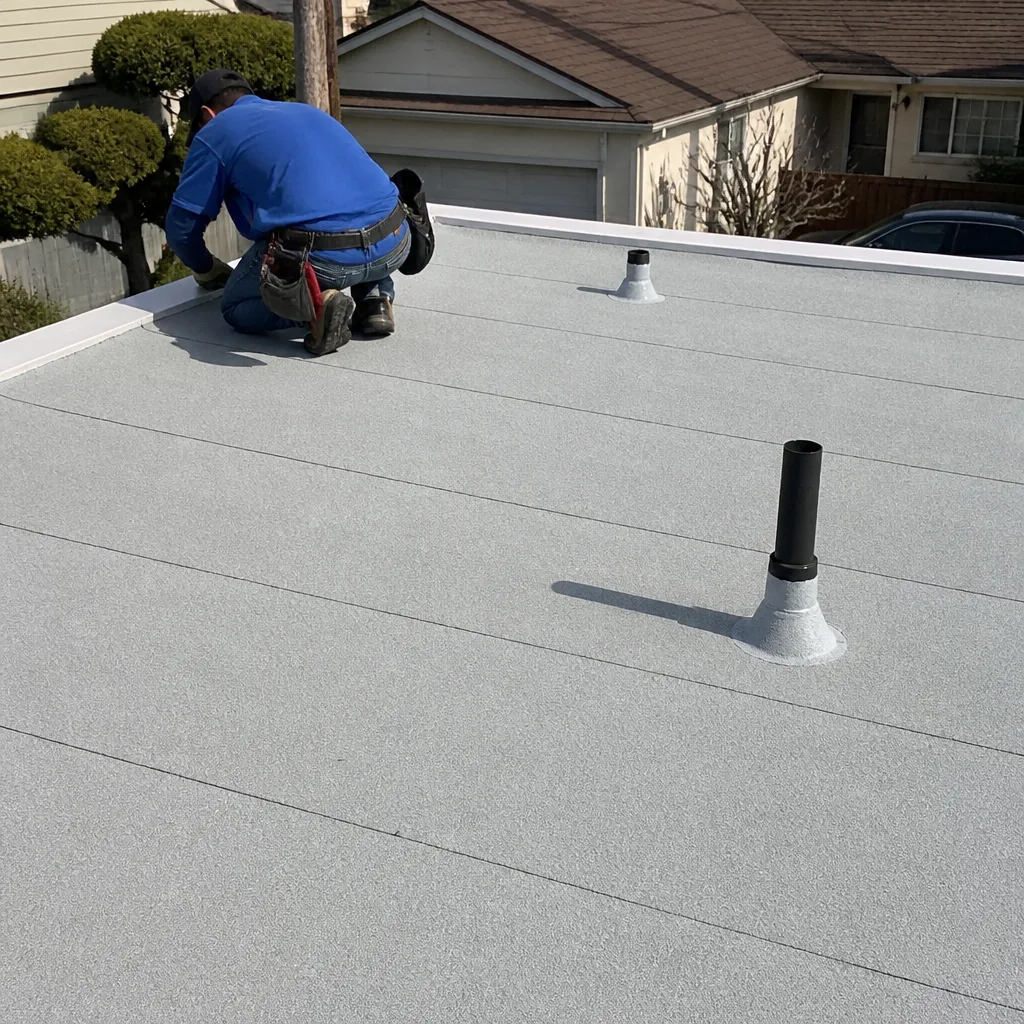 After
After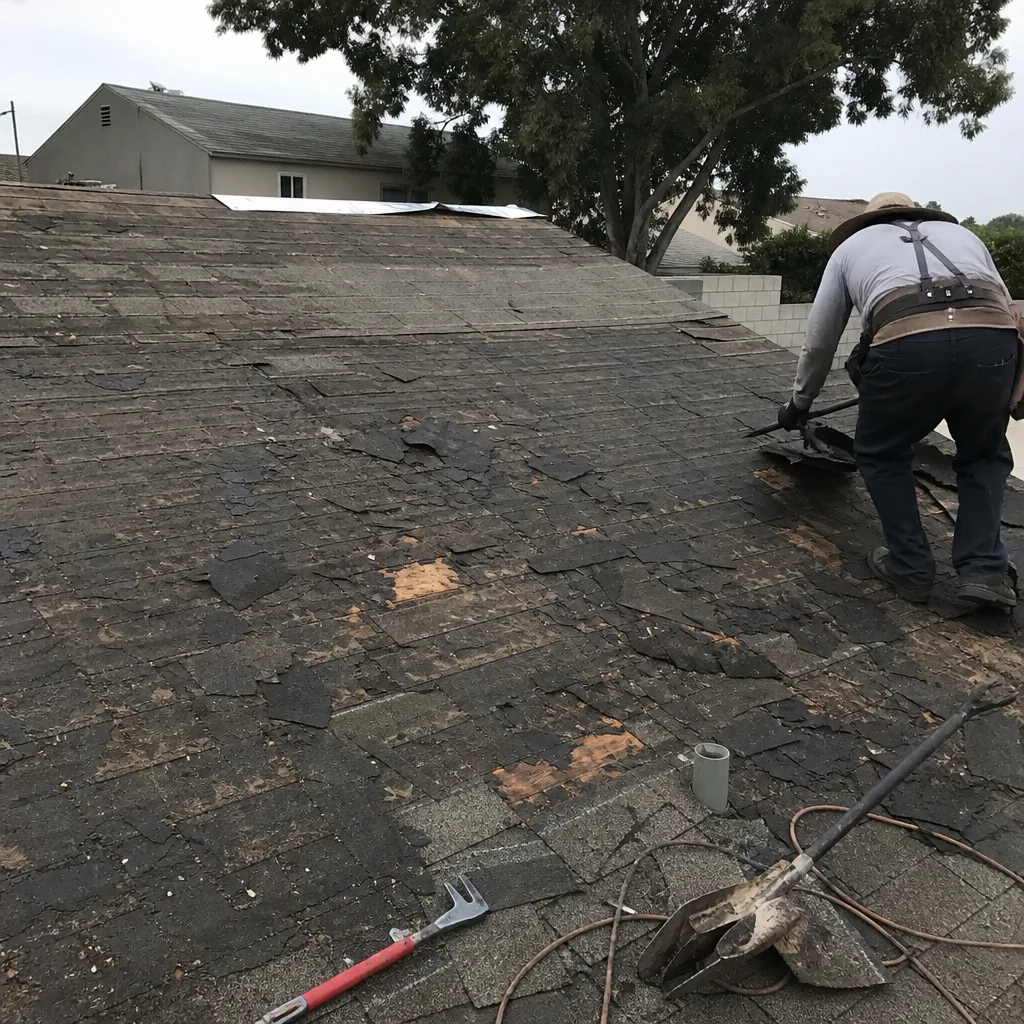 Before
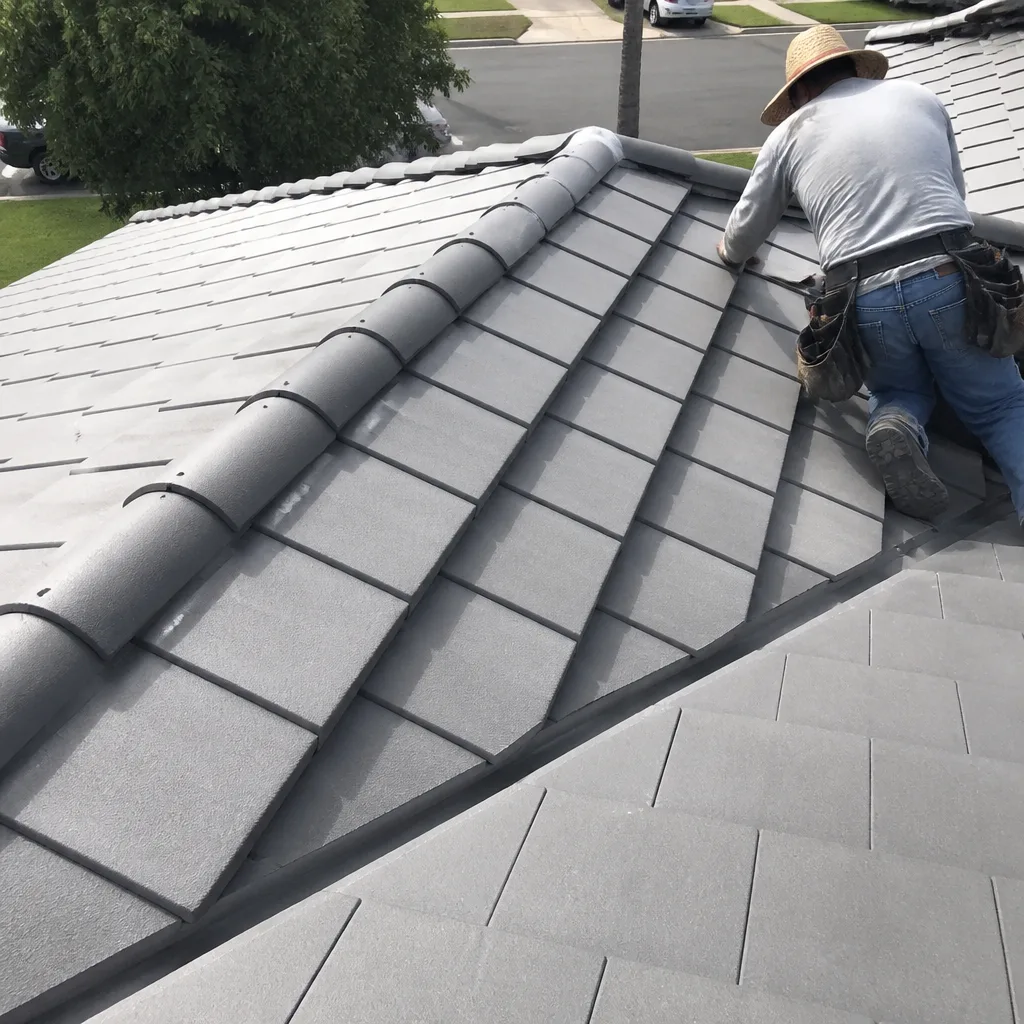 After
After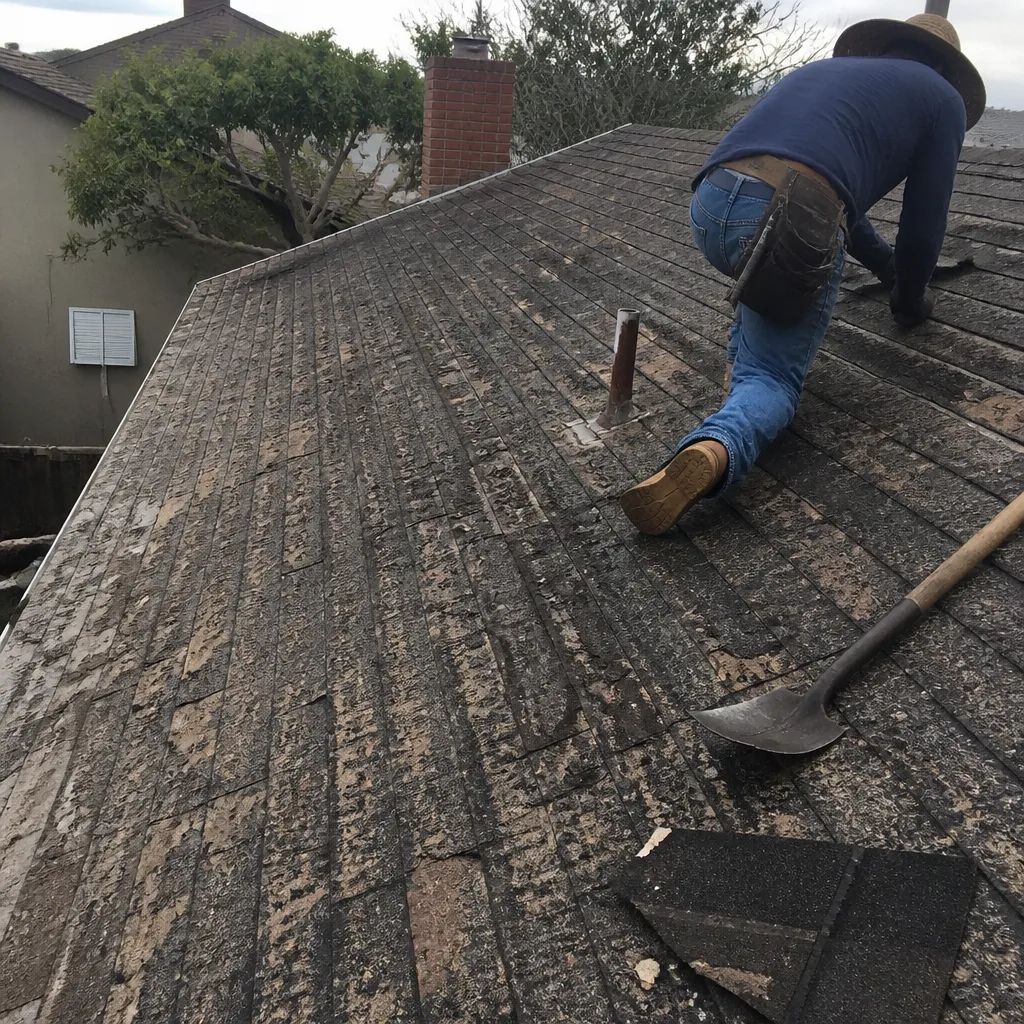 Before
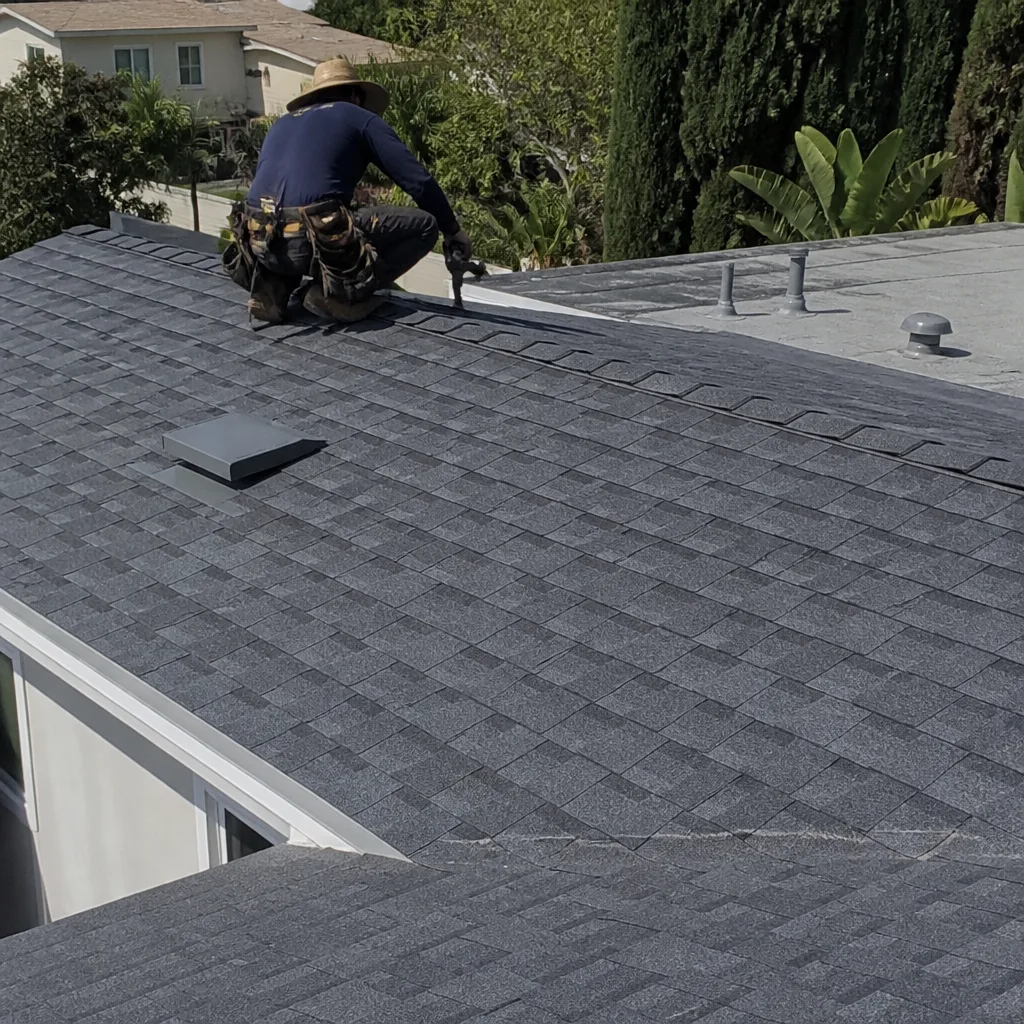 After
AfterReplacement Cost & What’s Included
Most Tamko flashing replacements in Long Beach fall between $350 and $900 installed. A single pipe boot swap runs on the low end, usually $350 to $450 when the surrounding shingles are in decent shape. Step flashing along a wall or chimney runs higher, often $500 to $900, because it involves lifting multiple courses of shingles and re-seating them with new fasteners and sealant. The labor drives most of the cost; the flashing itself is typically $40 to $120 in material.
Here’s how the pricing actually breaks down on our work orders:
- Pipe boot replacement: $350 – $450 installed
- Step flashing repair, one wall or chimney side: $500 – $700 installed
- Full chimney flashing replacement: $700 – $900 installed
- Valley or wall intersection flashing replacement: $600 – $850 installed
Every job includes a written price before work starts, and that number is the number on the invoice. No change orders, no “we found more damage once we opened it up” surprise. If we discover something during the repair that genuinely needs attention, we stop, show you photos, and give you a written price for the additional work before we touch it. Every flashing replacement we install is covered by our 365-Day Done Right Promise: if it fails within a year, we come back and fix it at no charge. That’s in writing, on every job, no exceptions.
DIY or Call Us?
Flashing replacement is not a high-tension spring situation or an electrical hazard, so it’s not dangerous in the same way a garage door cable is. But it is roof work, and roof work on a two-story Long Beach home means ladders, steep slopes, and a real risk of a bad fall. If you’re comfortable on a ladder and the flashing in question is a single pipe boot on a low-slope section, a careful homeowner can sometimes handle it. The failure point is almost never the metal itself; it’s the sealant and re-seating around it. If you don’t get the shingles re-fastened properly, you’ll have a new leak in the same spot within a season.
Most of the flashing failures we see in Long Beach are on second-story slopes or chimney saddles that require fall protection and a second set of hands. Dylan Pace grew up in Los Angeles, trained at Los Angeles Trade-Technical College, and has spent nearly two decades on roofs across Southern California, from Belmont Shore bungalows to flat commercial buildings near the Port. The honest read is this: if you’re not sure, call us. We’ll send you a written price before any work starts, and you’ll know exactly what you’re paying before we put a ladder against your house.
FAQs
Galvanized flashing lasts 12 to 15 years in Long Beach’s salt air, while aluminum flashing typically lasts 20 to 25 years. If your home is within a mile or two of the water, expect the lower end of those ranges. Coastal exposure strips the protective zinc coating from galvanized metal roughly a third faster than inland locations.
Small cracks or separated joints can sometimes be sealed and re-fastened if the surrounding metal is still sound. But if the flashing is rusted through, pitted, or bent out of shape, replacement is the honest fix. Repairs on failing flashing tend to buy a year or two at best. We’ll tell you which route makes sense after we see the metal up close, and our repair work carries the same 365-Day Done Right Promise.
Most single-penetration flashing replacements take one to three hours from ladder up to cleanup. Full chimney flashing or a long wall intersection can take half a day. We’ll give you a live trackable arrival time before we come out, and photos of the work before and after, so you know exactly what was done.
Yes. Our trucks carry standard 4-inch and 6-inch step flashing, pipe boots in the common sizes, and aluminum and galvanized sheet stock for custom bends. If the job calls for something specific we don’t have on hand, we’ll source it locally and schedule a return visit with no additional trip charge.
If you’ve got a leak, a rusted pipe boot, or flashing that’s lifting at the seams, call (562) 471-4832 for a free estimate. We’ll give you a written price before any work starts, and if we wouldn’t put it on our own roof, we’re not putting it on yours.
Written by Dylan Pace, Owner, Crestview Roofing Co Long Beach at Crestview Roofing Co Long Beach, serving Long Beach and nearby areas.